Daily coverage from across the country, written for the expat community
Results for “training”Clear
Ecuador’s Jóvenes en Acción program is expanding from 80,000 to 150,000 beneficiaries. Registration opened June 16 for vulnerable young adults ages 18 to 29, with selected participants receiving three $400 transfers over three months after completing assigned activities.
A three-day virtual job fair in Ecuador will run from June 18 to June 20, 2026, with 1,050 vacancies across more than 20 participating companies. The fair includes roles in commercial, financial, accounting, technical, administrative, driving, assistant, operations and intern profiles.
Quito councilman Wilson Merino says taxpayers have reported failures and interruptions in the municipal patent-payment platform just as the filing calendar begins. The concern is practical: once the deadline tied to the ninth RUC digit passes, the system automatically generates late-payment surcharges.
El Universo reports Ecuador's national registration for public higher education runs from June 2 to 6 for the second 2026 academic period. The virtual process is mandatory for applicants seeking seats in public universities, polytechnic schools, institutes and conservatories.
Primicias reports Quito is drafting rules for bus operators to raise the fare from $0.35 to $0.40. One proposed condition is a second mandatory safety inspection for more than 3,300 city buses.
SECAP has opened 30,000 free virtual course spots through the Compromiso por el Empleo program. Courses run 60 to 90 hours and cover areas like e-commerce, web programming, gastronomy, computer maintenance, basic electricity and auto mechanics.
Drivers in Guayaquil and Quito report stations hiding Extra gasoline before the May 12 price adjustment. Terminal dispatches are down 33%. Fill up now if you can.
A survey of 2,570 companies found that nearly half can't fill open positions. The biggest barriers: lack of experience, weak digital skills, and wages that don't compete.
Two bills moving through Ecuador's Assembly would redirect a 0.5% employer payroll contribution — currently flowing through IESS — to fund the Secap professional training agency. If you run an Ecuadorian business or employ anyone locally, this changes the math.
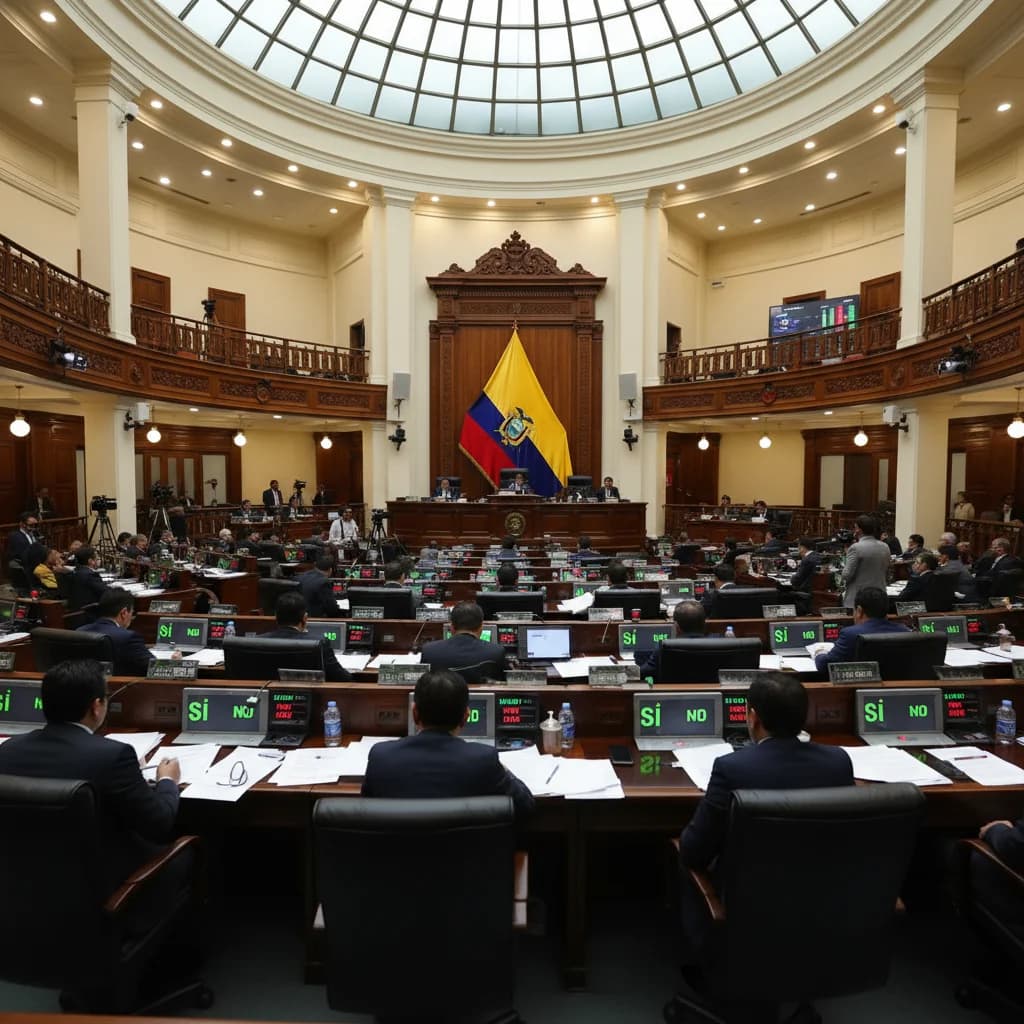
The National Assembly approved a law making financial education mandatory across all levels of Ecuador's education system, from early childhood to university. The curriculum will cover electronic fraud prevention, safe digital platform use, and AI literacy. Revolución Ciudadana voted against despite one legislator calling it 'objective and technical.'
Environment and Energy Minister Inés Manzano announced leadership changes at both CNEL (the national distribution utility) and CENACE (the grid operator) this week after widespread blackouts and what she called 'slow and inefficient' responses. Juan Carlos Blum — a mechanical engineer with a background in multilateral energy work — is the new CNEL general manager.
Foreign Minister Gabriela Sommerfeld released Ecuador's 2025 foreign affairs report, highlighting 107 bilateral instruments signed, $343.9 million in non-reimbursable international cooperation, 529,685 online visa appointments, and a 97.98% budget execution rate. The headline policy win: more than 7,400 tariff lines going to 0% under the US trade deal.