CONAIE Demands Ecuador's Mining and Energy Bill Be Shelved — Warns of 'Danger to the Country'

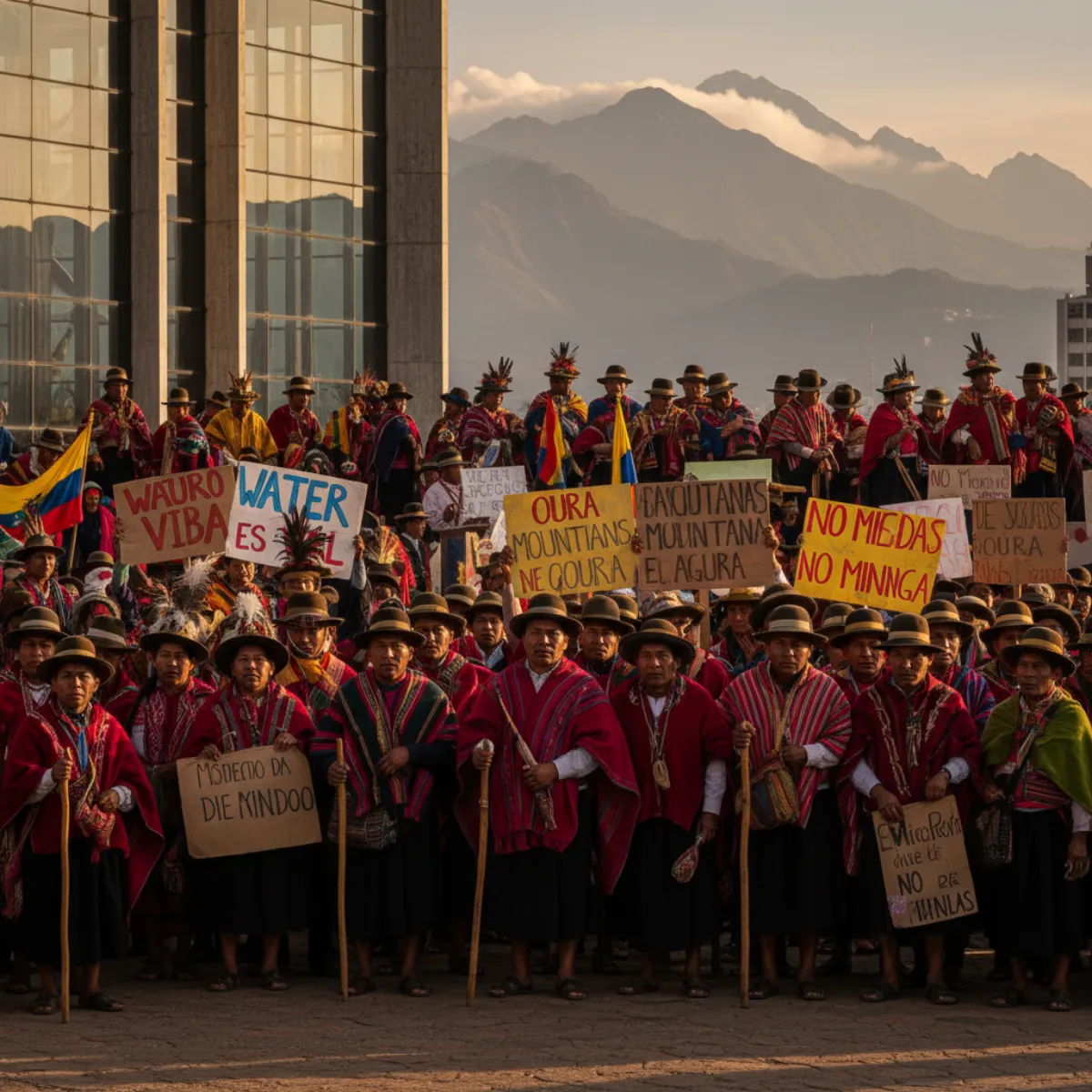
Ecuador's most powerful social movement is drawing a line in the sand — and expats living near mining zones should be paying close attention.
The Bill
On January 28, 2026, President Daniel Noboa submitted a bill to the National Assembly titled the "Law to Strengthen Strategic Sectors: Mining and Energy." It was classified as urgent in economic matters (económico urgente), which under Ecuador's Organic Law of the Legislative Function means the Assembly has 30 days to debate and vote on it — setting a deadline of approximately March 2, 2026.
The government says the reform is needed to:
- Attract investment and generate jobs
- Boost state revenue to address a $16 billion fiscal deficit
- Combat illegal mining through better regulation
- Prevent future energy blackouts by opening the electricity sector to private participation
What the Bill Actually Changes
The two most controversial provisions:
1. Environmental Licensing → "Authorizations"
Current law requires mining companies to obtain a full environmental license (licencia ambiental) through the Ministry of Environment before exploration, extraction, or sales can begin. The proposed reform would replace this with a simpler "environmental authorization" — a streamlined process designed to eliminate what former minister Santos called the "viacrucis" (ordeal) that investors face when seeking permits.
Critics say this guts Ecuador's environmental protection framework.
2. Private Energy Concessions Up to 30 Years
The bill allows private companies to finance, build, operate, and maintain new energy projects for periods of up to 30 years. The government insists this is not privatization because the state retains ownership of the service. But opponents see it as a backdoor to handing control of Ecuador's energy infrastructure to foreign corporations.
CONAIE's Response
The Confederación de Nacionalidades Indígenas del Ecuador (CONAIE) — the country's largest indigenous organization and historically its most powerful social mobilization force — rejected the bill on February 2, 2026 and has escalated its opposition since.
On February 16, CONAIE President Marlon Vargas posted a video calling for the bill to be shelved entirely (archivado). His key arguments:
- The bill is "a danger to the country" ("un peligro para el país")
- It reduces prior consultation with indigenous communities to a formality rather than a genuine process of free, prior, and informed consent — as required by Ecuador's Constitution and international treaties
- It replaces environmental licenses with authorizations that weaken the state's ability to prevent irreversible damage
- It facilitates long-term concessions to large mining companies at the expense of local communities
- In a country where rivers are already contaminated with mercury and cyanide from mining operations, weakening oversight is unconscionable
CONAIE warned that passage of the bill would intensify social conflict in mining zones and called on the Pachakutik legislative bloc (CONAIE's political arm) and other lawmakers to reject the proposal.
The Protest Risk
CONAIE has a track record of backing its words with action:
- June 2022: A massive 18-day national uprising shut down roads and cities across Ecuador, demanding economic reforms and an end to mining expansion. Several mining operations were forced to halt
- 2019: Nationwide protests against fuel subsidy removal paralyzed Quito for over a week
- Late 2025: CONAIE mobilized again after the government's IMF-backed austerity measures, including the VAT increase from 12% to 15%
With the Assembly deadline of approximately March 2, the window for a mobilization is narrow but real. If the bill advances without amendment, a protest response is likely.
What This Means for Expats
- Water supply is the core issue. For expats in Cuenca, the Loma Larga/Quimsacocha gold project threatens the city's water supply. This bill would make it easier for projects like Loma Larga to advance. In Loja/Vilcabamba, mining processing restrictions were just imposed (the government suspended mining in three provinces in February) — but this bill could reverse those protections
- Protest disruptions are possible. CONAIE mobilizations can block highways, close businesses, and disrupt travel for days or weeks. If you have travel plans in late February or March, have a backup plan
- The Assembly deadline matters. Watch for news around March 2. If the bill passes, expect CONAIE to escalate. If it's modified or shelved, tensions may ease
- Stock up on essentials. If protests materialize, grocery stores and pharmacies can be affected. Having 1-2 weeks of food, water, and medications on hand is prudent
- This is Ecuador's defining political tension. The extractive industry vs. indigenous rights vs. environmental protection debate shapes everything from water quality to road access to local economies. Understanding it is essential to understanding the country you live in
Sources: Prensa Latina, El Ciudadano, ICN Diario, Expreso, GK City, Ecuador 221
Report an article problem
Tell us what seems wrong or outdated. Include your email so we can follow up if needed.
More in Politics
View all →Cuenca's Suspended Mayor Cristian Zamora Faces Illicit Enrichment Charges, Denies Allegations From Mexico
September 22, 2026
Xavier Jordán Detained in U.S., Faces Deportation to Ecuador Amidst Multiple High-Profile Cases
September 18, 2026
Ecuador Dismantles Anti-Corruption Unit, Raising Concerns for Judicial Integrity and Security
September 18, 2026
Keep practical Ecuador coverage free to read.
Reader support helps fund source monitoring, translation, editing, publishing, and national coverage for expats across Ecuador.
Comments
No comments yet. Be the first to share your thoughts!