Government Seizes Control of Ecuador's Expreso and Extra Newspapers — Press Freedom Groups Denounce 'Intimidation'


Two of Ecuador's most-read newspapers are now under government-appointed oversight — and press freedom organizations are sounding the alarm.
What Happened
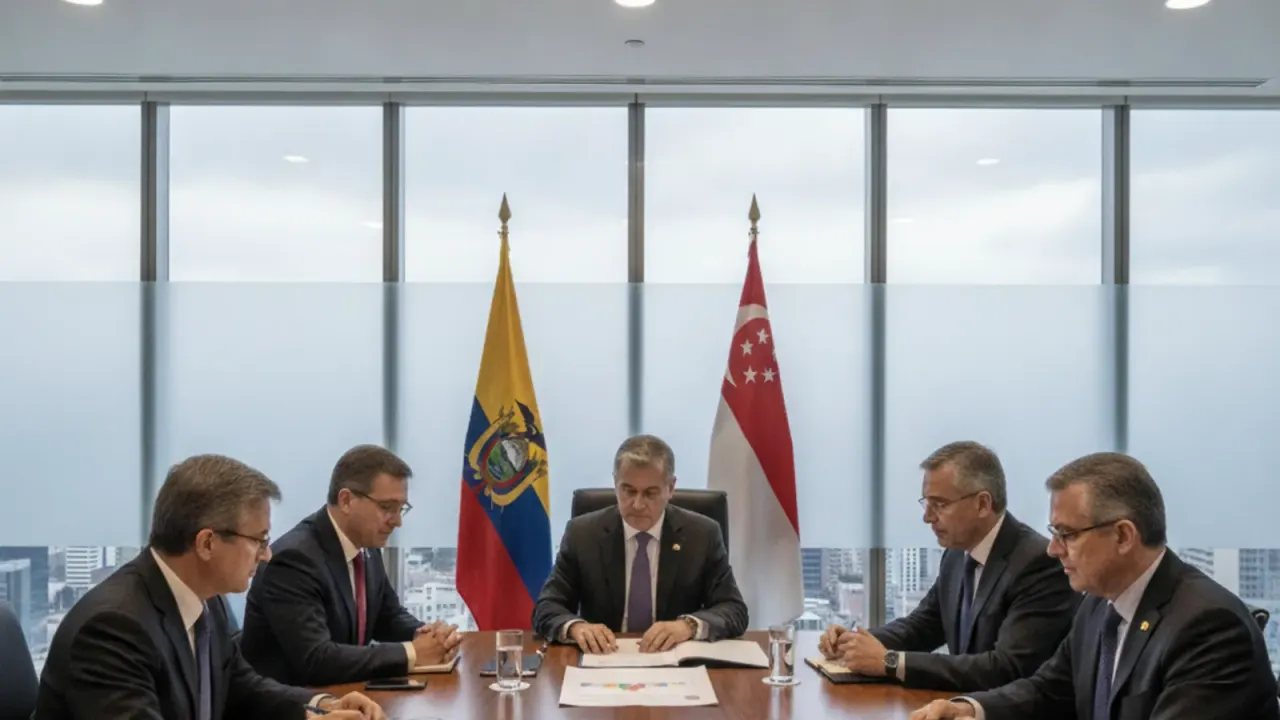
On February 18, 2026, Ecuador's Superintendencia de Compañías (Superintendency of Companies) issued a resolution ordering the intervention of Gráficos Nacionales S.A. (Granasa), the publishing company that owns the newspapers Expreso and Extra.
The Superintendency appointed Elizabeth del Pilar Jiménez, an attorney, as the external interventor — essentially a government-designated administrator who will oversee the company's financial operations and submit monthly reports on management activities.
The stated purpose: to "supervise the economic-financial operations and promote the correction of observed irregularities, avoiding harm to shareholders and third parties."
What Triggered the Intervention
The intervention was requested by Inmobiliar — the Secretaría Técnica de Gestión Inmobiliaria del Sector Público, an agency attached directly to the Presidency of the Republic.
Inmobiliar demanded that Granasa provide detailed records of all legal advisors retained between 2022 and 2025, including case matrices showing what legal matters were being handled. Granasa refused.
Eduardo Carmigniani, representing Granasa, responded publicly: "It is public knowledge of Expreso's critical position toward President Noboa... serious risks exist that the requested information could be used unfairly" to harm the company's interests.
Inmobiliar claims a 2.56% shareholding in Granasa — a stake the company says remains legally disputed.
The Backstory
This intervention didn't come out of nowhere. Granasa has alleged a pattern of government pressure:
- Late 2025: The Superintendency ordered Granasa to revert 40% of its shares to a company currently in liquidation — an order the publisher contested as legally unfounded
- Ongoing investigations: Granasa reported that Ecuador's Internal Revenue Service (SRI) and the Fiscalía General (Public Prosecutor) have opened investigations involving allegations of tax fraud and money laundering against the company
- Editorial stance: Expreso has maintained a consistently critical editorial line toward the Noboa administration, particularly on security policy, government spending, and press freedom
About Expreso and Extra
Expreso is one of Ecuador's most established newspapers, based in Guayaquil and founded in 1969. It's known for serious political and economic reporting with an independent editorial line.
Extra is Ecuador's highest-circulation newspaper — a tabloid-format daily that reaches millions of readers across the country, particularly in working-class and lower-middle-class communities. Together, the two papers represent a massive share of Ecuador's print media readership.
Granasa is owned by the Martínez family, who founded the company and have controlled it for decades.
Press Freedom Reactions
The response from press freedom organizations was swift and harsh:
The Inter-American Press Society (SIP) — the hemisphere's most influential press freedom organization — called the intervention "an intimidating act that can inhibit the exercise of free and independent journalism."
Martha Ramos, president of the SIP's Press Freedom and Information Commission, stated that "control over independent companies cannot, under any circumstance, become an indirect mechanism of censorship or editorial pressure."
The SIP had previously characterized government actions against Granasa as "reprisals," noting that "using public institutions against critical media is one of the most sophisticated forms of indirect censorship."
CNN en Español ran international coverage of the intervention, framing it as a potential press freedom crisis.
Granasa itself issued a statement: the company is "the target of attempts to affect its credibility," but these "will not be able to bend the independence of the editorial and informative line of Expreso and Extra."
The Ecuador Media Context
Ecuador has a complicated history with press freedom:
- Under Rafael Correa (2007–2017), the government passed a restrictive communications law, seized media outlets through asset forfeiture, and used state advertising as a weapon against critical coverage
- Under Guillermo Lasso (2021–2023), media relations improved significantly
- Under Daniel Noboa (2023–present), press freedom groups have documented increasing friction between the government and critical media outlets
The Granasa intervention is the most significant government action against a private media company since the Correa era.
What This Means for Expats
Confused about which visa fits your situation? Book a 30-minute consultation with Chip and leave with a clear plan.
Book a consultation- Independent media is your lifeline. If you live in Ecuador, you rely on newspapers like Expreso, Extra, El Universo, and El Comercio for information about safety, policy changes, visa rules, and local events. Government control of newsrooms threatens the quality of that information
- This sets a precedent. If the government can install an administrator at Granasa over a disputed 2.56% shareholding and a refused information request, any media company could face similar pressure
- Watch for changes in coverage. The intervention may or may not affect Expreso and Extra's editorial content. But the chilling effect — journalists self-censoring to avoid further government action — is often more damaging than overt censorship
- International attention matters. CNN, the SIP, and international press freedom organizations are watching this case. That external scrutiny is one of the strongest protections against further escalation
- Ecuador's press freedom ranking could slip. Reporters Without Borders already ranks Ecuador at 110 out of 180 countries on its Press Freedom Index. Actions like this won't help
Sources: TeleSUR, Primicias, SIP, CNN en Español
More in Politics
View all →Keep practical Ecuador coverage free to read.
Reader support helps fund source monitoring, translation, editing, publishing, and national coverage for expats across Ecuador.
Need help with your Ecuador visa? EcuaPass handles the paperwork for you. Learn more →
Comments
No comments yet. Be the first to share your thoughts!