Daily coverage from across the country, written for the expat community
Results for “dry season”Clear
Tumbaco residents and Quito firefighters are watching the dry season closely after serious fire emergencies between 2023 and 2025. Forest fires have fallen in the urban Tumbaco sector, but waste burning remains a persistent risk, with 73 waste-burn events in 2025 and 19 already counted in 2026.
El Universo reports that Quito has an INAMHI weather warning through 17:00 on Friday, May 29, with medium temperatures of 22-24 C and high levels of 25-27 C expected in parts of the metro district.
Ecuador is burning through diesel at a 23% faster rate to keep the lights on. Diesel prices jumped from .11 to .45 per gallon. And the government just failed — for the second time — to secure emergency thermal generation contracts.
Without Colombian electricity and an unreliable Coca Codo Sinclair plant, Ecuador's grid operator projects rolling blackout risk during the October-March dry season. The government is scrambling to rent diesel generators.
The incoming Energy Minister inherits a five-front crisis: a 900+ MW power generation gap, record electricity demand of 5,374 MW, oil output at its lowest since 2003, and a dormant mining cadastre. Here's what that means for daily life.
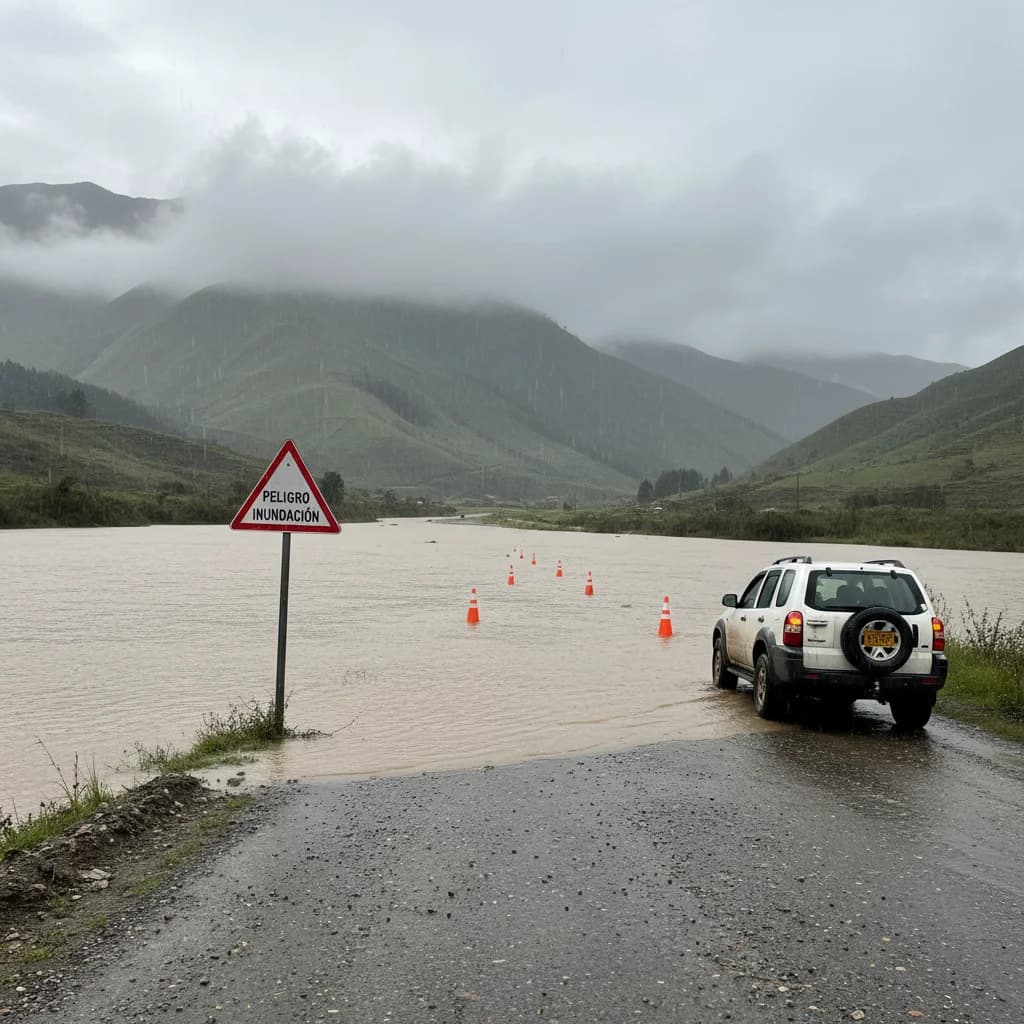
A Sunday afternoon hailstorm dumped 40+ cm of ice on Ecuador's northernmost city. Neighborhoods across southern Tulcán flooded, two landslides closed the E-35 highway, and emergency crews are still clearing damage.
Ecuador's strategic Mazar reservoir is sitting at ~2,137 m.s.n.m. — about 61% of stored energy capacity, and 23–28 meters above the same period in 2024. Energy Minister Inés Manzano declared "tenemos agua." Hydroelectric is currently delivering 72.3% of national output. Here's the supply-side picture as the heat wave continues.
A Primicias investigation published April 13 found 82 stretches of Ecuador's state highway network have been in 'permanent poor condition' for at least three years. Sucumbíos and Imbabura top the list by distance. Zamora leads by percentage — 95% of its state network is in poor shape.
President Noboa said on April 13 that he has "no great hope" that Colombian President Gustavo Petro will change course on border security or commercial reciprocity. Ecuador will wait for Colombia's next administration before attempting a long-term solution. The trade war continues.
Energy sector expert Marco Acuña warned on April 8 that Ecuador has registered an electrical generation deficit that could trigger power cuts during peak hours. The government disagrees, but Colombia's energy cutoff and Coca Codo Sinclair's chronic underperformance create real vulnerability.
Ecuador has slapped 50% tariffs on Colombian imports, threatened to cut electricity sales, and hiked pipeline transit fees by 900%. With $2.8 billion in bilateral trade at risk, Colombian products are getting more expensive and de-escalation talks are just beginning.
Ecuador's state electricity company CELEC has filed a lawsuit in US federal court alleging that Progen, a private contractor, delivered refurbished and non-functional emergency generators under $149 million in contracts while draining the project's bank account to zero. The fraud is directly linked to the 2024 blackout crisis.