Daily coverage from across the country, written for the expat community
Results for “customs”Clear
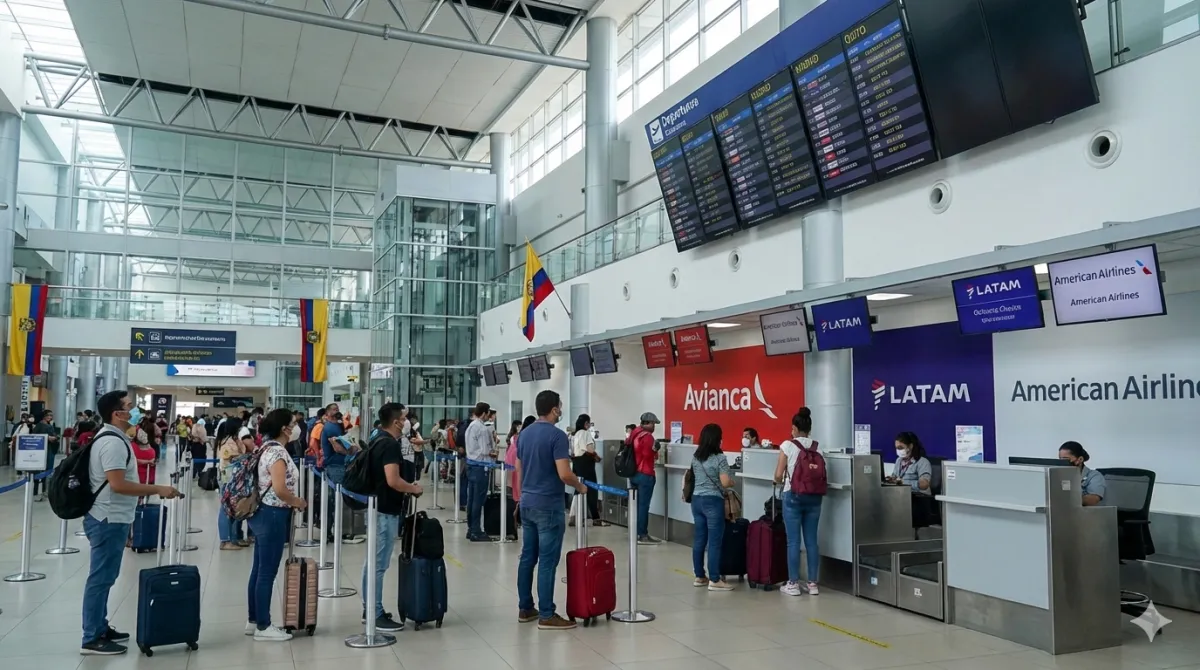
Ecuador's customs service found 21 hidden iPhones in luggage from a passenger arriving from Panama at Guayaquil's airport. In a separate Quito airport case, customs also retained about 6,000 dental medical-device items including implants, ligatures and resins.
A legal reform moving through Ecuador's Assembly aims to clear about 12,000 abandoned containers from the country's ports. The backlog includes roughly $450 million in retained cargo and average wait times of 365 days.
HIV patients at Quito's Carlos Andrade Marin Hospital say they have gone more than 15 days without TLD antiretroviral medication. Patient advocates estimate 1,600 HIV patients are treated at HCAM, while national health figures put Ecuador's HIV population at 52,357 people.
El Universo reports merchants and transport workers at Rumichaca expect activity to recover after Ecuador removed the 100% security charge on Colombian imports on June 1. Border workers said normal movement could take about a month to return.
Primicias reports President Daniel Noboa ordered Ecuador's security tariff on Colombian imports eliminated from June 1. The tariff had reached 100% during the trade dispute and affected products including medicines, cosmetics and plastic and rubber manufactures.
SENAE rolled back the duty-free alcohol allowance to three liters per traveler starting May 4. Nearly 700,000 liters entered duty-free in 2024, and the agency says informal commerce was the real beneficiary.
President Noboa presented Q1 2026 economic results in a national broadcast. Sales hit $63.2 billion (vs $57.7B Q1 2025). Country risk dropped from 1,908 bps a year ago to 416 today. Public investment jumped from $42M to $533M YoY. Here's what the government is claiming and what to actually take from it.
New numbers from Colombia's DIAN show Colombian exports to Ecuador fell 27% in January–February 2026 as Ecuador's security-tariff regime ramped up. Between February and March, the fall steepened to 57%. Ecuador's tariff escalates again on May 1 — from 50% to 100%. Here's the picture and what it means for consumer prices.
Ecuador's Production, Foreign Trade, Investment and Fisheries Minister Luis Alberto Jaramillo met with the Ecuadorian-American Chamber of Commerce in Guayaquil on April 14 to walk through the US Reciprocal Trade Agreement. Headline: 57% of non-oil exports get zero tariffs. Concerns: competition with subsidized US agricultural products.
Ecuador's April 9 imposition of a 100% tariff on Colombian products — targeting $2 billion in annual bilateral trade — has triggered the deepest institutional crisis the Comunidad Andina has faced in its 57-year existence. Former Colombian president Álvaro Uribe publicly warned Ipiales is "in ruin."
Police K-9 units intercepted nearly 22,000 dried shark fins weighing 1,905 kilograms at Guayaquil's Jose Joaquin de Olmedo International Airport on April 2. The shipment -- 75 bundles disguised as fish bladders -- was bound for Kuala Lumpur, Malaysia. It is one of Ecuador's largest shark fin seizures in recent years.
The U.S. Trade Representative and Ecuador formalized a reciprocal trade deal covering approximately $2.786 billion in goods. U.S. beef tariffs will phase to zero over three years, pork tariffs are mostly eliminated, and Ecuador secures preferential treatment for over 90% of the U.S. agricultural schedule.