State of Emergency Extended — Ecuador Remains Under Security Decree Across 9 Provinces

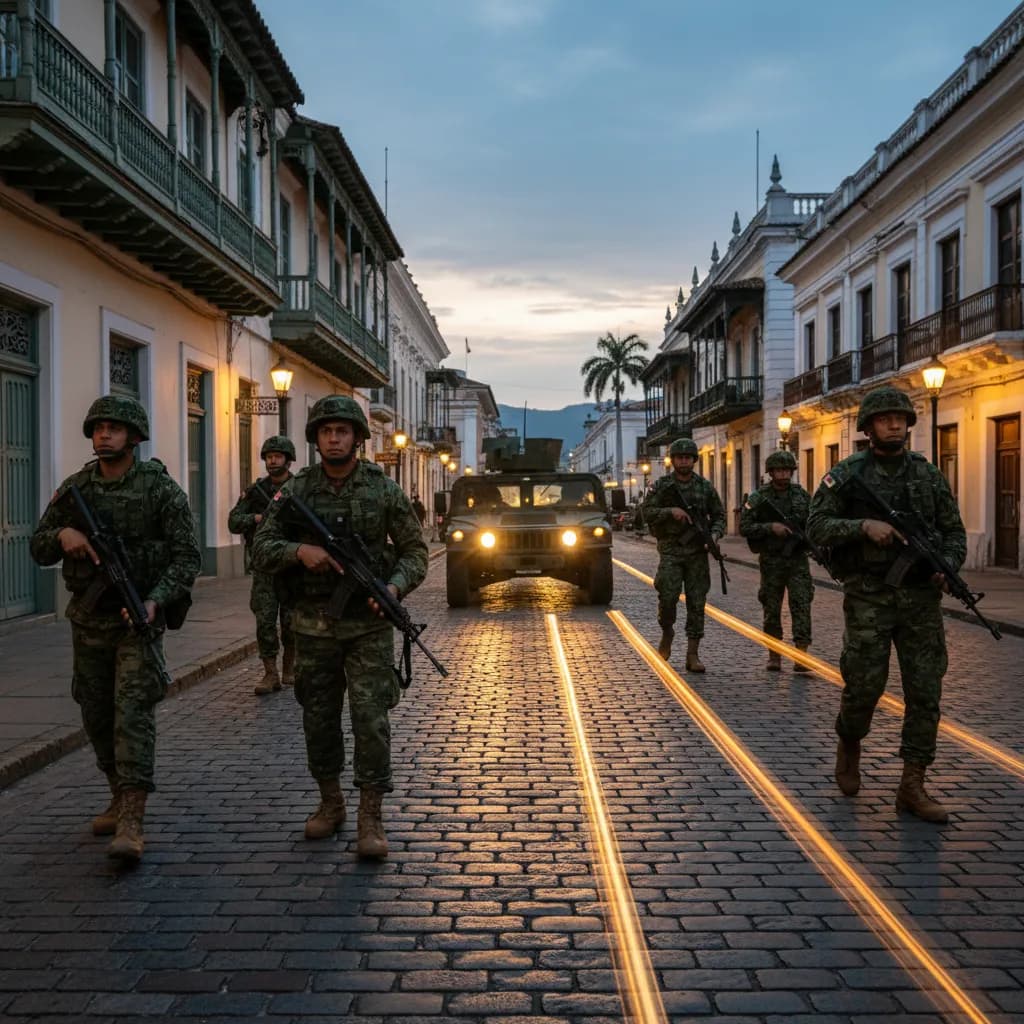
Ecuador enters its third consecutive month under emergency security measures — and there is no end date in sight.
The Current State of Emergency
The 60-day state of emergency declared by President Daniel Noboa on January 1, 2026 has been extended for an additional 30 days, keeping Ecuador under emergency security governance through at least mid-April 2026. The extension was formalized by executive decree and ratified by the Constitutional Court, as required under Ecuador's constitution.
The emergency applies to nine provinces and three municipalities:
Provinces Under State of Emergency
| Province | Region | Population | Primary Threat | |----------|--------|-----------|----------------| | Guayas | Coast | 4.4 million | Gang warfare, port security (Guayaquil) | | Manabi | Coast | 1.5 million | Drug trafficking, extortion | | Santa Elena | Coast | 400,000 | Coastal trafficking routes | | Los Rios | Coast | 900,000 | Trafficking corridors | | El Oro | Coast | 700,000 | Border trafficking, illegal mining | | Esmeraldas | Coast | 650,000 | FARC dissidents, border violence | | Pichincha | Sierra | 3.2 million | Organized crime (Quito metro) | | Santo Domingo | Transition | 450,000 | Trafficking hub | | Sucumbios | Amazon | 230,000 | Border violence, oil infrastructure threats |
Notable Absences
Azuay province (Cuenca) is not on the list. Neither are Loja, Imbabura (Otavalo/Cotacachi), Tungurahua (Banos), or Chimborazo (Riobamba). The highland provinces that are home to major expat communities — with the exception of Pichincha (Quito) — remain outside the emergency zone.
This is not an accident. The security crisis is overwhelmingly concentrated along the coast and border regions, where drug trafficking organizations control territory, extort businesses, and contest government authority. The highlands, while not immune to crime, operate at a fundamentally different threat level.
The 2025 Homicide Crisis
The extension comes in the shadow of Ecuador's worst year of violence on record. The country closed 2025 with approximately 9,000 homicides — a rate of roughly 50 per 100,000 people. To put that in perspective:
| Country | Homicide Rate (per 100K) | |---------|------------------------| | Ecuador (2025) | ~50 | | Colombia | ~26 | | Mexico | ~25 | | United States | ~6.4 | | Canada | ~2.0 |
Ecuador's homicide rate has quadrupled since 2019, when it stood at approximately 12 per 100,000 — a level that at the time was considered moderate for Latin America. The explosion of violence is directly linked to the penetration of Mexican and Colombian drug cartels into Ecuadorian territory, using the country's ports (primarily Guayaquil) as a primary transshipment point for cocaine bound for the United States and Europe.
What the Emergency Allows
Under the state of emergency, the government exercises expanded powers:
- Military deployment in civilian areas — soldiers patrol alongside police in affected provinces, man checkpoints, and conduct raids
- Curfews — the government has authority to impose curfews (typically 11 PM to 5 AM) in the most affected areas, though enforcement varies
- Suspension of certain rights — the constitution permits temporary limits on freedom of assembly, movement restrictions in specific zones, and expanded search-and-seizure authority
- Military control of prisons — the armed forces have assumed operational control of Ecuador's prison system, which has been the epicenter of gang warfare
The Armed Forces of Ecuador currently have approximately 15,000 troops deployed in domestic security operations — a significant diversion from traditional military roles.
Noboa's Security Strategy
President Noboa has framed Ecuador's crisis as an "internal armed conflict" — legal language that justifies military engagement against organized crime groups. His security strategy includes:
- Multi-agency task forces combining military, police, and intelligence services
- International cooperation with the United States (DEA, Southern Command), Colombia, and Peru
- Port security overhaul at Guayaquil, including new scanning technology and restructured customs operations
- Gang leadership targeting — several high-profile cartel figures have been captured or killed in 2025-2026
- Prison reform — construction of new maximum-security facilities and separation of gang leaders from rank-and-file members
Critics argue the security-first approach has produced diminishing returns. While spectacular military operations make headlines, the underlying drivers of violence — poverty, corruption, and demand for cocaine in consumer countries — remain unaddressed.
Regional Security Differences
The security situation varies enormously across Ecuador. Understanding this geography is critical for expats:
High-risk zones (emergency provinces):
- Guayaquil: The epicenter. Extortion, kidnapping, and gang violence affect daily life. Port areas and southern neighborhoods are particularly dangerous
- Esmeraldas: FARC dissident groups operate near the Colombian border. Armed clashes between security forces and criminal organizations are regular occurrences
- Sucumbios: Oil-producing region with border violence and narco-trafficking activity
Moderate-risk zones:
- Quito (Pichincha): The capital experiences organized crime activity, but violence is generally targeted rather than random. Most expat neighborhoods (Cumbaya, Tumbaco, La Floresta) see relatively low levels of violent crime
- Manabi coast: Tourist areas like Canoa and Puerto Lopez remain generally safe, but inland trafficking corridors see violence
Lower-risk zones (NOT under emergency):
- Cuenca (Azuay): Consistently rates as one of Ecuador's safest cities. Property crime exists but violent crime is comparatively rare
- Loja/Vilcabamba: Remote location and small population keep violent crime levels low
- Imbabura (Otavalo/Cotacachi): Highland indigenous communities with relatively low violent crime
- Tungurahua (Banos): Tourist economy with low violent crime
What This Means for Expats
Confused about which visa fits your situation? Book a 30-minute consultation with Chip and leave with a clear plan.
Book a consultation- If you live in Cuenca, Vilcabamba, Otavalo, or other highland communities not on the list — your area is not under state of emergency. Daily life continues normally. This does not mean crime does not exist, but the military deployment and curfew provisions do not apply to your province
- If you live in Quito, you are technically in an emergency zone. In practice, most expat neighborhoods are not significantly affected by the emergency measures. You may see more military checkpoints and patrols, particularly at night. Carry your cedula or passport at all times
- If you travel to the coast, be aware. Guayaquil, Esmeraldas, and Manabi are under full emergency provisions. Travel during daylight hours, use registered transportation, and avoid peripheral urban neighborhoods. The Malecon and central tourist areas of Guayaquil remain relatively well-policed
- The military presence is generally protective, not threatening. Soldiers at checkpoints are typically professional and courteous. Have your identification ready, remain calm, and cooperate with any requests. If you are stopped and speak limited Spanish, say "Soy residente, aqui esta mi cedula" (I am a resident, here is my ID card)
- Curfews may affect nightlife and dining. In provinces where curfews are enforced, restaurants and bars may close earlier than usual. Check local conditions before planning late-night activities
- Travel insurance is essential. Ensure your travel or health insurance covers you in areas under state of emergency. Some policies have exclusion clauses for conflict zones — verify your coverage
- Emergency contacts: ECU 911 for all emergencies, US Embassy in Quito: (02) 398-5000
Sources: Latin America Reports, Presidencia de la Republica del Ecuador, El Universo, InSight Crime
More in Safety
View all →Ecuador Braces for Intensifying El Niño Rains from November 2026, Guayaquil Records Historic September Rainfall
September 15, 2026
Montañita Shooting Leaves One Dead, Four Foreigners Injured Amidst State of Exception in Santa Elena
September 14, 2026
New Curfew Imposed in Four Ecuadorian Provinces: No Safe-Conducts Issued
September 12, 2026
Keep practical Ecuador coverage free to read.
Reader support helps fund source monitoring, translation, editing, publishing, and national coverage for expats across Ecuador.
Need help with your Ecuador visa? EcuaPass handles the paperwork for you. Learn more →
Comments
No comments yet. Be the first to share your thoughts!