Daily coverage from across the country, written for the expat community
Results for “military”Clear
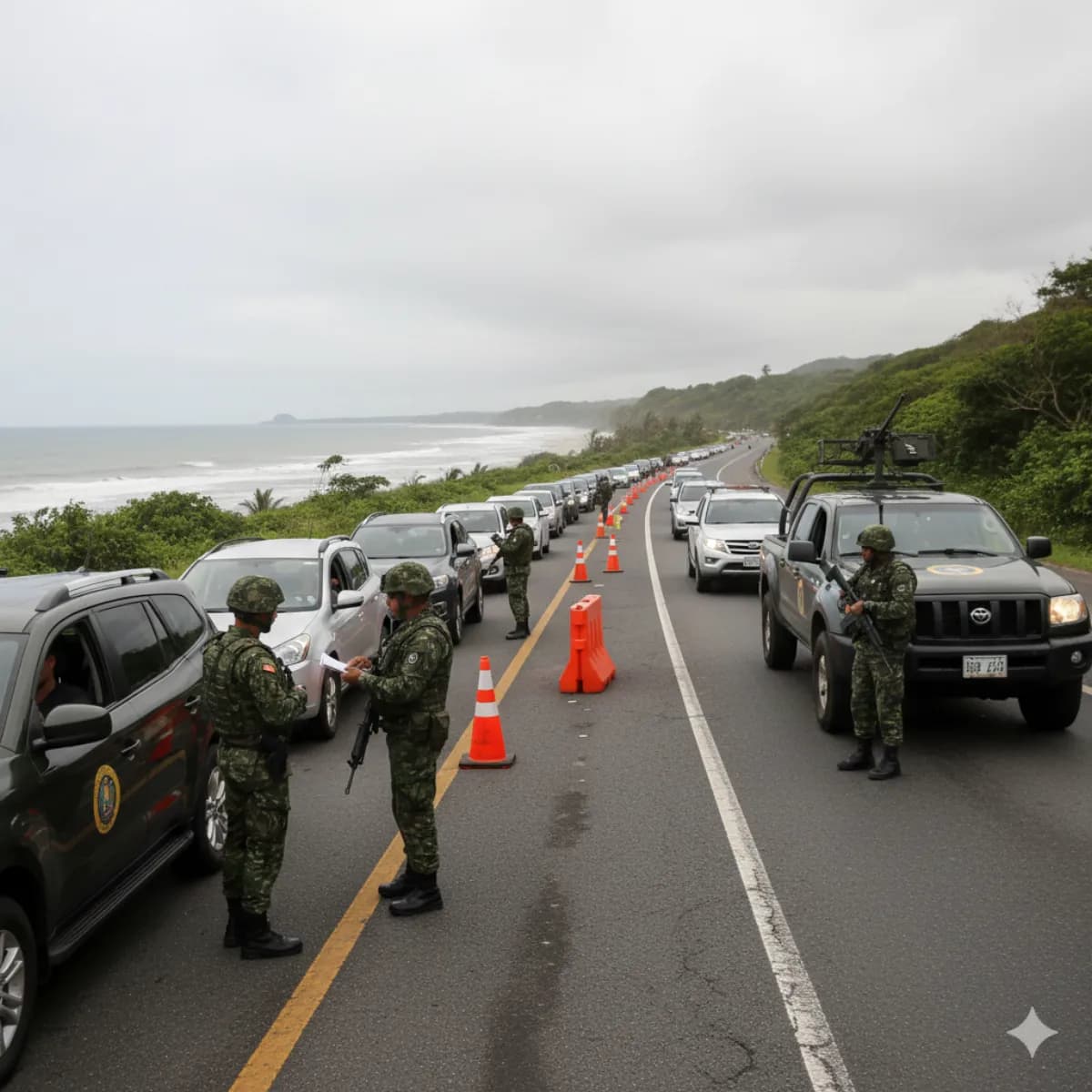
President Daniel Noboa issued Executive Decree 424 on June 18, opening a path for allied foreign military personnel to support Ecuador’s security operations. Officials say foreign troops are not expected immediately, while 13,000 Ecuadorian military personnel are being deployed to Guayas, Manabí, El Oro and Los Ríos.
Ecuador’s new state of exception applies for 60 days in ten provinces and three cantons. There is no curfew for now, but the decree allows temporary limits on home and correspondence protections while security forces operate in the covered areas.
El Universo reports ECU911 and the Armed Forces have removed around 1,000 irregularly installed cameras across Ecuador, including 95 in Guayaquil and recent removals in Fertisa and the Trinitaria port zone.
The militarization of Puerto Bolívar has surfaced the human cost: at least 300 families forcibly displaced, criminal group Los Lobos occupying up to 500 homes, and the terminal tied to 10.8 tons — 11.24% — of drugs seized nationally. Over 1,000 troops are searching 1,642 homes.
Armed forces, police, and intelligence services deployed to Puerto Bolívar in El Oro province for a major operation against criminal structures controlling the port. Defense Minister Loffredo says groups are using the port to ship drugs and extort fishermen.
A four-month investigation culminated in Operación Forseti-Finisterra — 11 arrested including the gang's hit squad leader, firearms and drugs seized, and a criminal network dismantled.
The curfew that started May 3 is producing results — 500+ detained in the first two days, including 80+ wanted individuals captured during enforcement operations. Here is what has changed since our initial guide.
Interior Minister Reimberg told AFP that organized crime groups have launched roughly 600 drone attempts at El Encuentro prison since it opened. The government says it will build as many mega-prisons as needed.
Ecuador is investing USD 3 million in a new 24,000 m² Naval Station at Posorja, deploying coast guard, marine infantry, and naval aviation across the approaches to Guayaquil's export ports. Operational by 2027, possibly late 2026.
A 16-person fuel trafficking ring operating across six provinces since October 2024 has been dismantled. Three active-duty military members, five police officers, and eight civilians were detained. A judge has ordered preventive detention for 15 of them on charges tied to hydrocarbon diversion and support for criminal organizations.
Ecuador's Armed Forces have inspected 663 of the country's 1,130 licensed private security firms so far, part of an escalating weapons-control campaign triggered by evidence that private security arsenals have been feeding organized crime. A January 2026 raid on a Los Lagartos-linked firm recovered 200+ weapons with altered serial numbers.
Ecuador's military intercepted $50,540 in counterfeit $20 bills at Quito's Carcelén bus terminal on Sunday, April 12. The fakes — more than 5,000 bills — were handed to the National Police. Worth knowing if you handle dollar cash in Ecuador.