Daily coverage from across the country, written for the expat community
Results for “pension”Clear
BIESS has three mechanisms for affiliates, retirees and pensioners with pending mortgage obligations: refinancing, restructuring and novation. The options are designed to reduce late-interest pressure, protect credit history and avoid legal action tied to missed payments.
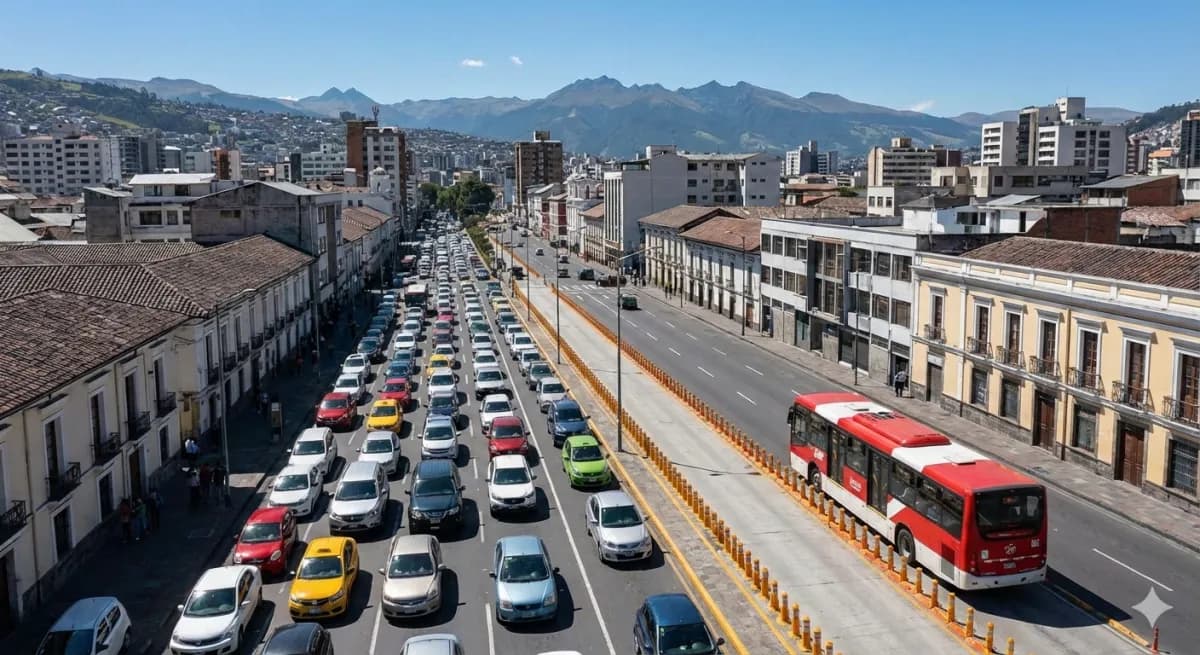
Quito drivers can request compensation when a vehicle is damaged by potholes or municipal work, using an EPMMOP process that requires photos, a traffic report and repair documentation. The city’s pothole damage is estimated at $20 million to $30 million a year.
Loja's city council archived a proposal to raise the urban bus fare from 30 to 36 cents, but the transport consortium says the suspension of service remains indefinite. Expreso reports students, workers and merchants are being hit hardest while legal action seeks to restore service.
Monthly inflation reached 0.53% in April 2026, driven mainly by transport costs, with annual inflation at 2.6%. Meanwhile Ecuador's tariff on Colombian goods escalated to 100% on May 1. What it means for anyone living here on a fixed or foreign income.
Your IESS pension isn't based on your last salary or years of service alone — it's calculated from the average of your five highest-earning years. If your employer has been under-reporting your salary, you won't find out until retirement. Here's how the formula works.
The math: 30 years of contributions at minimum wage gets you $361/month. Forty years gets you the full $482. IESS uses your five best earning years, not your last salary. Here's the complete breakdown.
Two bills moving through Ecuador's Assembly would redirect a 0.5% employer payroll contribution — currently flowing through IESS — to fund the Secap professional training agency. If you run an Ecuadorian business or employ anyone locally, this changes the math.
Quito's Metro restarted normal operations Tuesday, April 21, after an 11-hour shutdown that began at 5:30 am Monday. The deeper story: manufacturer CAF has recommended replacing 864 train wheels, citing abnormal wear that partly triggered the outage. Mayor Pabel Muñoz is also investigating possible sabotage.
The Quito Metro suspended commercial operations at 5:30 AM on Monday, April 20, after a technical incident. All stations were affected. No official timeline for restoration. Here's what commuters need to know and what alternatives exist.
Ecuador's social security pension system has more than doubled its retiree count since 2016 — to 840,456 — while contributing affiliates have stayed flat at 3.54 million. Pension spending hits $7.55 billion in 2026, contributions cover only $3.44 billion. The IESS is requesting $3.05 billion from the government and pulling $1.41 billion from reserves. Here's what's actually happening to Ecuador's pension system.
Guayaquil's water utility Interagua will suspend service across large parts of the city and the Daule corridor this weekend for maintenance. Cuts run from Saturday April 18 at 10 PM through Sunday April 19, with some sectors out until 3 PM. Here's the sector-by-sector breakdown.
Ecuador's April 12 fuel adjustment raised Extra and Ecopaís gasoline by 4.6%, diesel by 4.7%, and Súper by 26% — from $3.62 to $4.57 per gallon. Transport associations are planning a march in Quito and warning that costs will be passed through to importers, exporters, and ultimately consumers. Here's the breakdown.