Daily coverage from across the country, written for the expat community
Results for “diesel”Clear
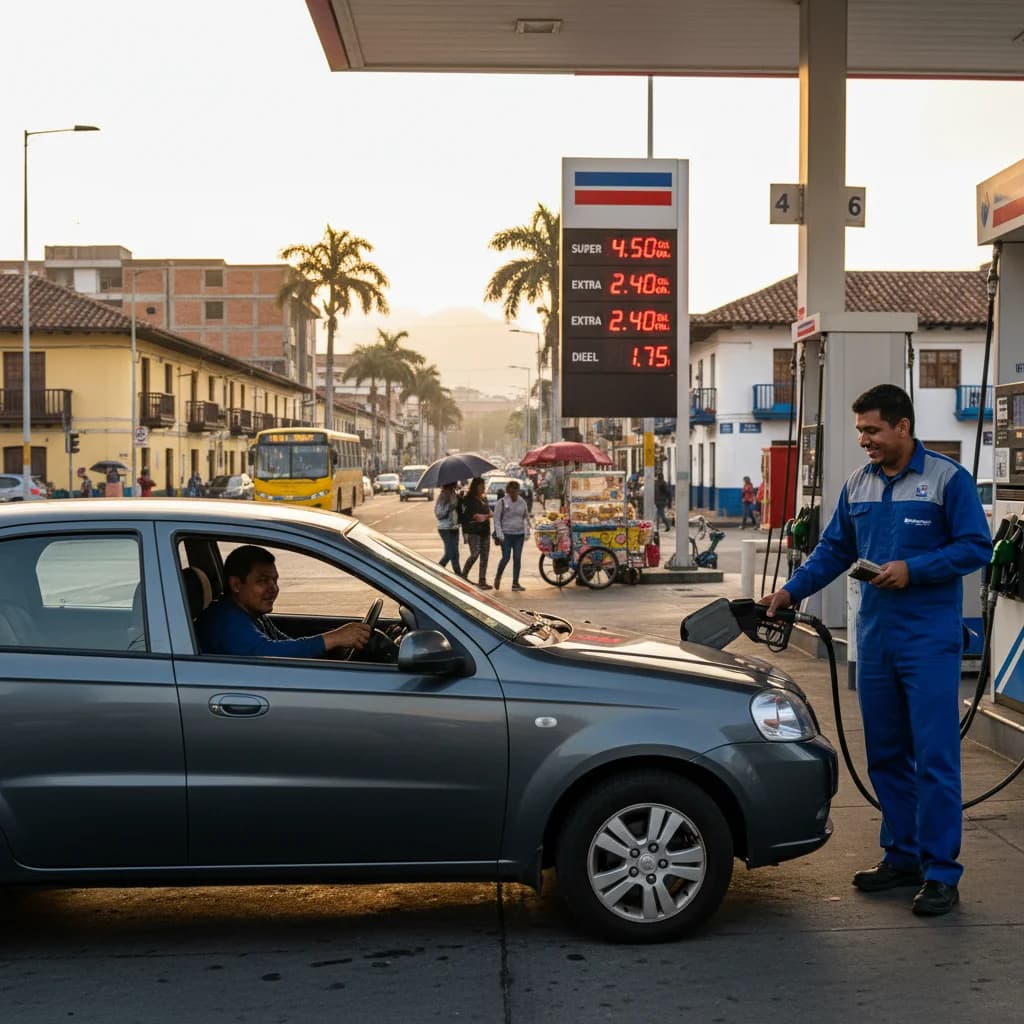
Teleamazonas reports that diesel reached USD 3.25 per gallon in June 2026 and Extra gasoline reached USD 3.31. Prices continue to adjust monthly under Ecuador’s band system tied to international fuel-market movement.
Ecuador is checking gas stations, terminals and distribution centers before fuel prices update on June 12. Officials say gasoline extra, ecopaís, diesel and super are being dispatched normally, while the Esmeraldas refinery has recovered to about 90% of technical capacity.
Monthly inflation reached 0.53% in April 2026, driven mainly by transport costs, with annual inflation at 2.6%. Meanwhile Ecuador's tariff on Colombian goods escalated to 100% on May 1. What it means for anyone living here on a fixed or foreign income.
The May 12 price adjustment is official — diesel crossed $3/gallon for the first time, stations in Quito and Guayaquil are running dry, and Ecuador is importing 65% of its fuel. The refinery FCC unit restarts May 15.
Drivers in Guayaquil and Quito report stations hiding Extra gasoline before the May 12 price adjustment. Terminal dispatches are down 33%. Fill up now if you can.
After Monday's paralysis that stranded 1.5 million commuters, Quito's blue buses resumed normal service Wednesday. But the underlying dispute is heading to formal negotiations on May 13, and a fare increase to /bin/zsh.65 is on the table.
Ecuador is burning through diesel at a 23% faster rate to keep the lights on. Diesel prices jumped from .11 to .45 per gallon. And the government just failed — for the second time — to secure emergency thermal generation contracts.
Without Colombian electricity and an unreliable Coca Codo Sinclair plant, Ecuador's grid operator projects rolling blackout risk during the October-March dry season. The government is scrambling to rent diesel generators.
Quito woke up without bus service on May 5 as operators cut hours to protest the end of diesel subsidies. The city handles 2 million transit trips daily, and 1.5 million of them depend on these buses.
The incoming Energy Minister inherits a five-front crisis: a 900+ MW power generation gap, record electricity demand of 5,374 MW, oil output at its lowest since 2003, and a dormant mining cadastre. Here's what that means for daily life.
Coastal residents report electricity bills climbing from $80 to $155, $126 to $400, and $130 to $280 in a single cycle. President Noboa announced a subsidy covering up to 180 kWh per household in heat-affected zones, worth roughly $20 per bill, appearing on May statements.
Ecuador's April 12 fuel adjustment raised Extra and Ecopaís gasoline by 4.6%, diesel by 4.7%, and Súper by 26% — from $3.62 to $4.57 per gallon. Transport associations are planning a march in Quito and warning that costs will be passed through to importers, exporters, and ultimately consumers. Here's the breakdown.