Ecuador-Colombia Trade War: Quito Talks End Without Deal, 30% Tariffs Stay

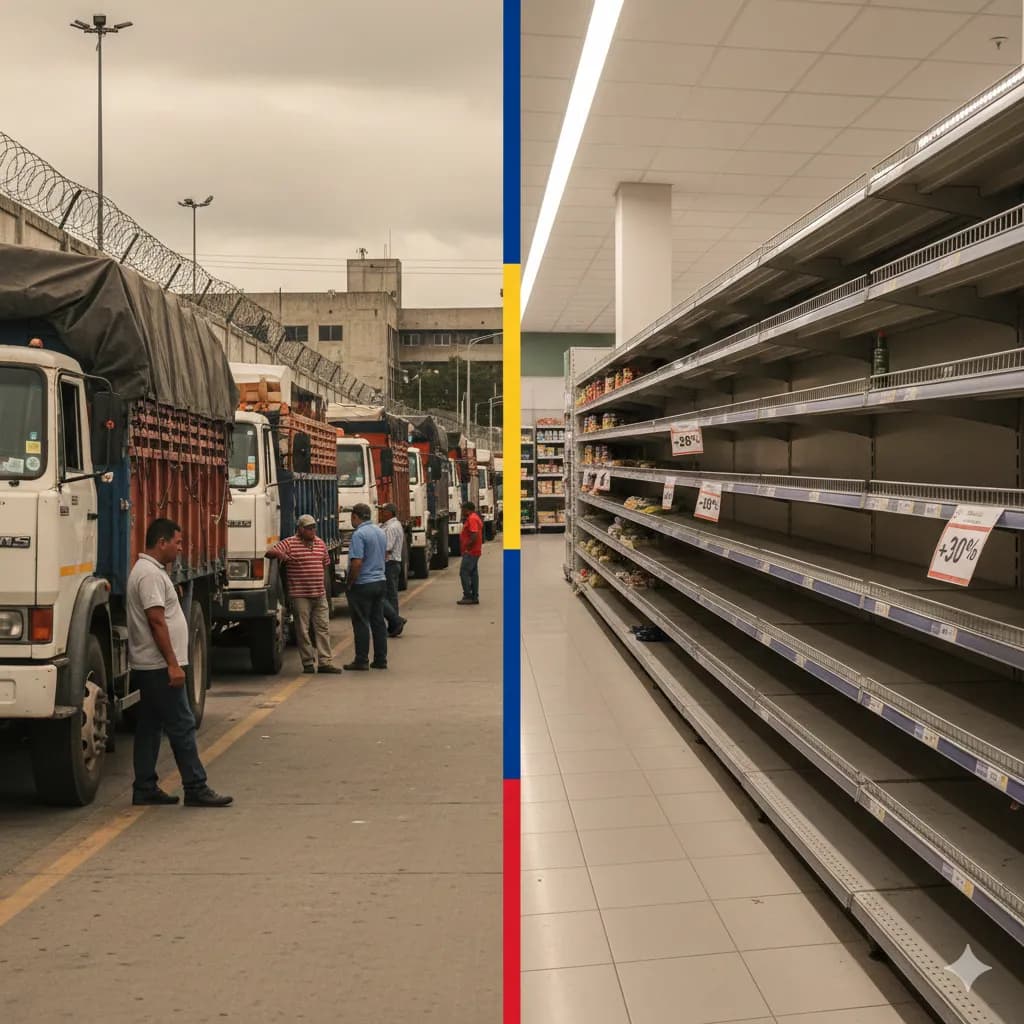
If you've noticed higher prices on Colombian products at the supermarket, get used to it for now. The high-level meeting between Ecuador and Colombia in Quito on February 6 ended without a deal, and the mutual 30% tariffs that took effect February 1 will remain in place.
What Happened in Quito
Ecuador's Foreign Minister Gabriela Sommerfeld hosted Colombia's Foreign Minister Rosa Villavicencio and a large delegation including Colombia's Defense Minister Pedro Sanchez Suarez and representatives from the ministries of Commerce, Mines and Energy, and Justice, plus state oil company Ecopetrol.
The meeting covered three areas: security, energy, and trade. Here's where things stand on each.
Security
This is where there was the most progress. Colombia committed to:
- Develop a joint binational security strategy targeting transnational organized crime at the border
- Eradicate 5,000 hectares of coca crops on the Colombian side of the border
- Reinforce military presence in southern Colombia
- Invest in technology and information sharing for border control
- Review 722 Colombian prisoner cases within three months -- cases that have been pending for 24 months
- Facilitate Venezuelan prisoner transfers to Venezuela via land routes
These security commitments are significant. Ecuador imposed its 30% tariff explicitly as a "security tariff," arguing that Colombia's failure to control drug trafficking and illegal mining at the shared border is a national security threat.
Energy
Colombia committed to resume petroleum sales to Ecuador, though specific volumes, pricing, and timelines weren't detailed. This matters because Colombia had previously threatened to halt electricity sales to Ecuador -- a serious threat given Ecuador's dependence on imported energy and the rolling blackouts the country suffered in 2024.
Ecuador also raised the tariff on Colombian oil transported through the Trans-Ecuadorian Pipeline (SOTE) by 900% -- from $3 to $30 per barrel -- adding another pressure point.
Trade -- The Stalemate
This is where the talks broke down:
- Colombia proposed that both countries simultaneously drop their 30% tariffs
- Ecuador responded that it would "evaluate the request in later stages" as part of a broader resolution of all pending issues
- Colombia announced it would proceed with its own retaliatory tariffs on 23 categories of Ecuadorian products and file a formal complaint with the Andean Community of Nations (CAN), arguing Ecuador violated the 1969 Cartagena Agreement
After the meeting, both governments issued statements blaming the other. Ecuador accused Colombia of misrepresenting the meeting's outcomes. Colombia said Ecuador was being intransigent.
Why This Started
President Noboa announced the 30% tariff on Colombian imports at the Davos Forum on January 21. His stated reasons:
- Colombia's failure to control drug trafficking at the border
- Lack of effective state presence on Colombia's southern frontier
- Ecuador's annual trade deficit with Colombia exceeding $1 billion
- Cross-border illegal mining contaminating Ecuadorian rivers
The tariffs took effect February 1.
What Expats Will Notice
Higher Prices
Colombian imports affected by the 30% tariff include processed foods, manufactured goods, cleaning products, and other consumer items commonly found in Ecuadorian supermarkets. Some products may simply disappear from shelves if importers decide the tariff makes them unprofitable.
Energy Risk
If the trade war escalates further and Colombia follows through on halting electricity exports, Ecuador could face power supply challenges. The country already experienced severe rolling blackouts in 2024 due to drought and infrastructure problems.
Border Disruption
Truckers and merchants from both countries have been protesting at border crossings. If you travel to the Colombian border area, expect potential delays.
Broader Economic Impact
Bilateral trade between Ecuador and Colombia is worth $2.8 billion annually. A prolonged trade war hurts both economies, but Ecuador -- as the smaller economy with the trade deficit -- has more to lose in absolute terms.
What Happens Next
Ministers from both countries have indicated they plan to meet again "this weekend or next" to continue negotiations. Meanwhile, Colombia is preparing its CAN complaint and its own tariff schedule.
The most likely outcome is an eventual negotiated de-escalation, but it could take weeks or months. In the meantime, prices on Colombian goods will remain elevated.
Sources: Primicias, El Universo, Infobae, La Republica EC
More in Economy
View all →Ecuador Businesses Asked to Use Generators Voluntarily as the Dry Season Begins
September 10, 2026
Store-Credit Reporting Gaps Put the Paperwork Behind Installment Purchases in Focus
September 10, 2026
Study Finds the Widest Financial Gaps Among Women, Young People, and Rural Ecuadorians
September 8, 2026
Keep practical Ecuador coverage free to read.
Reader support helps fund source monitoring, translation, editing, publishing, and national coverage for expats across Ecuador.
Need help with your Ecuador visa? EcuaPass handles the paperwork for you. Learn more →
Comments
No comments yet. Be the first to share your thoughts!


