Daily coverage from across the country, written for the expat community
Results for “public transport”Clear
Interprovincial buses were operating normally Friday morning after Fenacotip called off its planned July 3 stoppage. Travelers should still watch the fare talks now moving to technical tables with ANT.
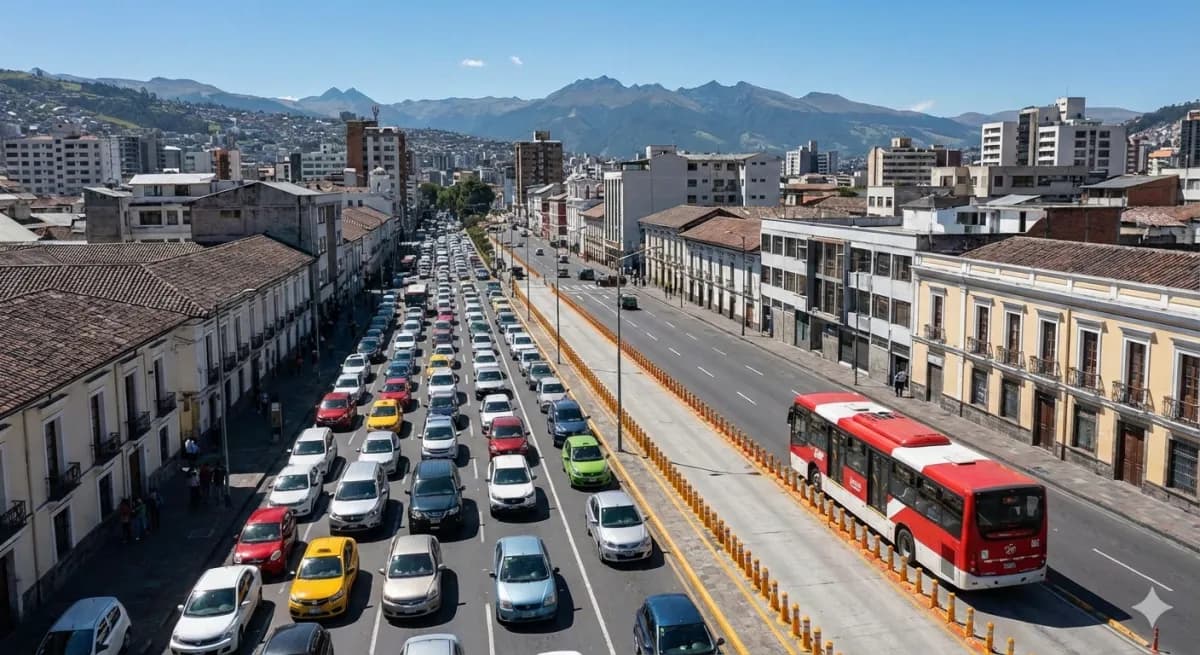
Quito reactivated pico y placa on June 29 for cars and motorcycles inside the city’s urban restriction area. Drivers should check the last digit of their plate before heading into the capital.
Public transport is still Quito’s main way to move, but new data show riders shifting toward private options. Around 64% of Quito residents still use public transport, while apps, taxis and motorcycles are gaining ground because of safety, comfort and service concerns.
Ambato bus operators agreed to resume normal service on June 5 after four days of reduced hours. The agreement includes $700 in fuel support for transport operators over six months, pending a June 8 council session.
Quito's Mobility Commission begins debate on a bus-fare ordinance that would set a 40-cent urban fare and 45-cent fare for electric or low-emission buses. The city's prior agreement keeps the 35-cent fare through 2026 with municipal compensation to operators.
El Universo reports Ambato urban and rural transport operators restricted service on June 1, working only from 08:00 to 14:00 while seeking a fare adjustment. The current urban fare is 30 cents.
Primicias reports Quito is drafting rules for bus operators to raise the fare from $0.35 to $0.40. One proposed condition is a second mandatory safety inspection for more than 3,300 city buses.
Loja's city council archived a proposal to raise the urban bus fare from 30 to 36 cents, but the transport consortium says the suspension of service remains indefinite. Expreso reports students, workers and merchants are being hit hardest while legal action seeks to restore service.
Ecuador's April 12 fuel adjustment raised Extra and Ecopaís gasoline by 4.6%, diesel by 4.7%, and Súper by 26% — from $3.62 to $4.57 per gallon. Transport associations are planning a march in Quito and warning that costs will be passed through to importers, exporters, and ultimately consumers. Here's the breakdown.
Gunmen opened fire at a sports complex on Avenida 25 de Julio in southern Guayaquil, killing multiple people and wounding several others, including minors. The attack bears the hallmarks of gang violence and underscores why southern Guayaquil remains Ecuador's most dangerous urban zone.
Ecuador's monthly fuel price adjustment takes effect April 12, raising prices on low-octane gasoline (Extra and Ecopais) and diesel. Super gasoline stays the same. The change pushes up transport costs and adds inflationary pressure to groceries and services.
Ecuador's Ministry of Health confirmed the country's first imported case of Mpox Clade Ib on April 2 -- the more contagious variant that has driven outbreaks in Central Africa. The case was identified through genomic sequencing by INSPI. Health authorities activated a national alert but stressed there is no need for alarm.