Daily coverage from across the country, written for the expat community
Results for “growth”Clear
Ecuador’s e-commerce market exceeded USD 7 billion in 2025 as faster delivery, payment options, and marketplace logistics turned online buying into a permanent habit.
Quito’s La Carolina and surrounding hypercenter remain among the city’s most demanded real-estate zones, with small units of 25 to 35 square meters in high demand. Market sources cite prices above $2,000 per square meter in high-end projects.
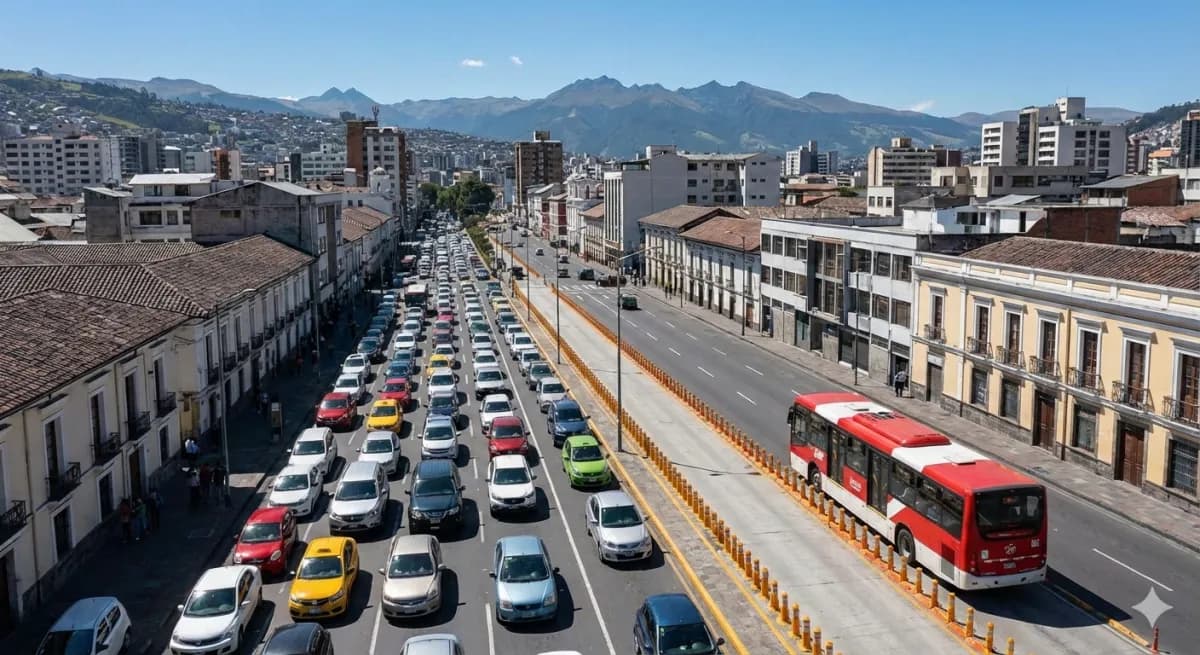
Public transport is still Quito’s main way to move, but new data show riders shifting toward private options. Around 64% of Quito residents still use public transport, while apps, taxis and motorcycles are gaining ground because of safety, comfort and service concerns.
Ecuador now has 393 institutions in the popular-and-solidarity finance market, including 387 savings and credit cooperatives. Segment 1 cooperatives hold more than $24.6 billion in assets, about 31% of private-bank assets, and the largest cooperatives now rank among the country's biggest financial institutions.
The May 6 placement of $1 billion in bonds drew $7 billion in demand from 200 international investors. Country risk is at its lowest since 2014. Here's what it means for the economy.
Ecuador's free trade agreement with China turned two on May 1. Imports from China surged 30% to $7.8 billion while exports barely grew. The non-petroleum trade deficit ballooned from $335 million to $1.9 billion. Here's what the numbers actually show.
Ecuador's riesgo país fell to 404 points on April 22, the lowest since 2015. GDP grew 3.7% in 2025, international reserves jumped 42%, and the IMF just disbursed another $394 million. Here's what the improving trajectory means for expats.
Ecuador's EMBI country risk indicator closed at 409 points on April 17 — the lowest level since October 2014. The reading reflects higher oil prices, an IMF $400M disbursement, and a growth forecast upgraded from 1.8% to 2.5% for 2026. Here's what it means for cost of living and investment.
President Noboa presented Q1 2026 economic results in a national broadcast. Sales hit $63.2 billion (vs $57.7B Q1 2025). Country risk dropped from 1,908 bps a year ago to 416 today. Public investment jumped from $42M to $533M YoY. Here's what the government is claiming and what to actually take from it.
The Banco Central del Ecuador raised its 2026 GDP growth projection to 2.5%, up 0.7 points from its September forecast. Inflation is expected at 1.8%, private credit to grow 10%, and the external account to post a $6.4 billion surplus. 2025 closed at 3.7% growth — so momentum is slowing.
The National Assembly approved a law making financial education mandatory across all levels of Ecuador's education system, from early childhood to university. The curriculum will cover electronic fraud prevention, safe digital platform use, and AI literacy. Revolución Ciudadana voted against despite one legislator calling it 'objective and technical.'
Economy Minister Sariha Moya presented Ecuador's fiscal efficiency formula at the IMF Spring Meetings in Washington on April 14. Her headline numbers: international reserves up from $3 billion to $11 billion, poverty down from 28% to 21% in 2025, and local-government payment delays cut by 85%. She credited the fuel subsidy phase-out that ran from June 2024 through September 2025.