Daily coverage from across the country, written for the expat community
Results for “National Assembly”Clear
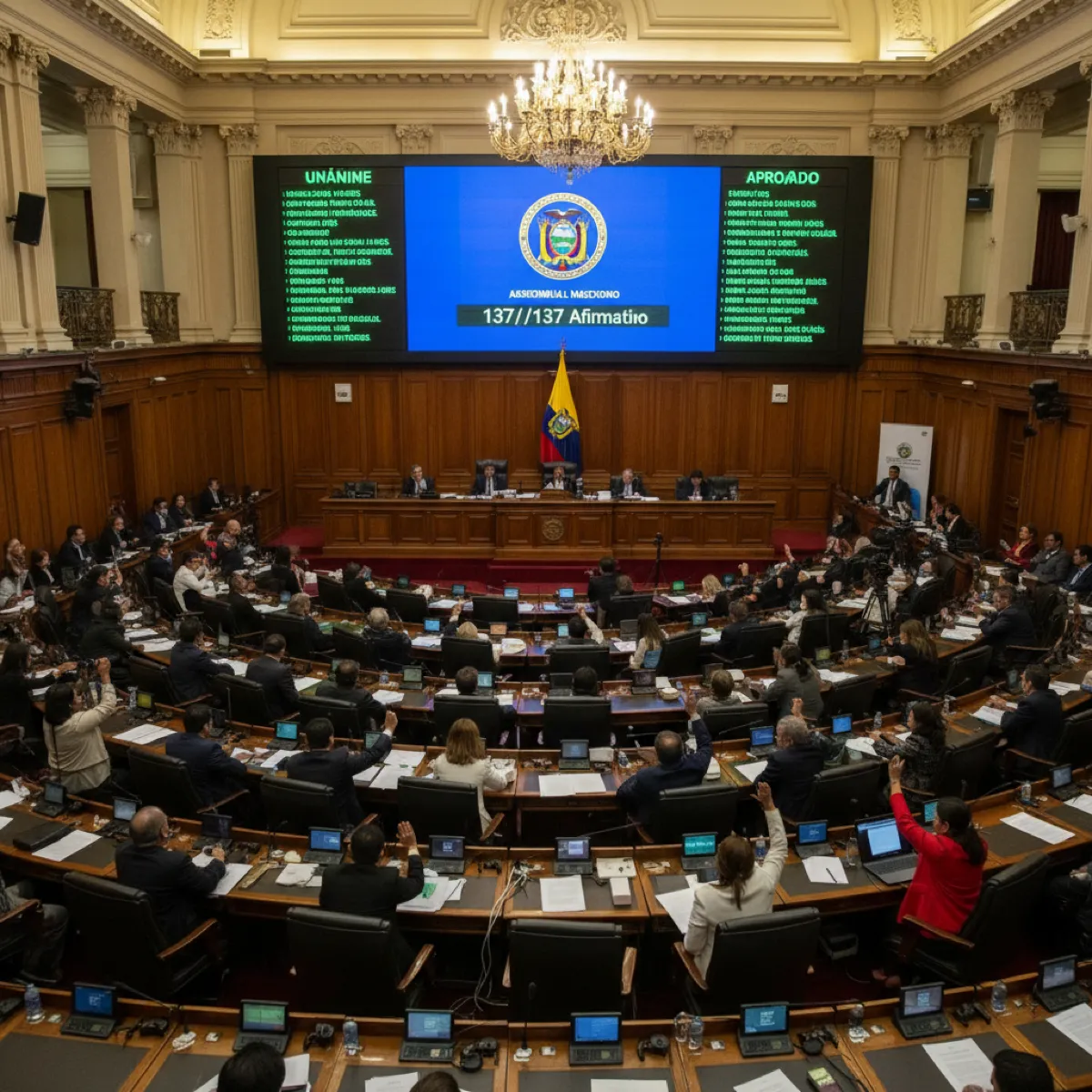
Ecuador's National Assembly approved a report (79-56-6) confirming organized crime has infiltrated municipal traffic agencies, weaponizing vehicle registration systems for 'legalizing criminal logistics.' Recommended reform: centralize registration under the national ANT.
The National Assembly approved a law making financial education mandatory across all levels of Ecuador's education system, from early childhood to university. The curriculum will cover electronic fraud prevention, safe digital platform use, and AI literacy. Revolución Ciudadana voted against despite one legislator calling it 'objective and technical.'
The National Assembly approved Ecuador's trade agreement with South Korea on April 14, a 23-chapter deal that could boost Ecuadorian exports by roughly $367 million over five years. 98.8% of Ecuador's exportable goods enter South Korea at zero tariff immediately under the agreement. Shrimp is the headline beneficiary. The deal still needs presidential ratification.
Ecuador's Constitutional Court ruled unanimously (9-0) that President Noboa cannot fast-track the bilateral investment treaty with the UAE. The ISDS provisions trigger constitutional review, and the treaty must be approved by the National Assembly. Investors tracking the UAE corridor should expect delays.
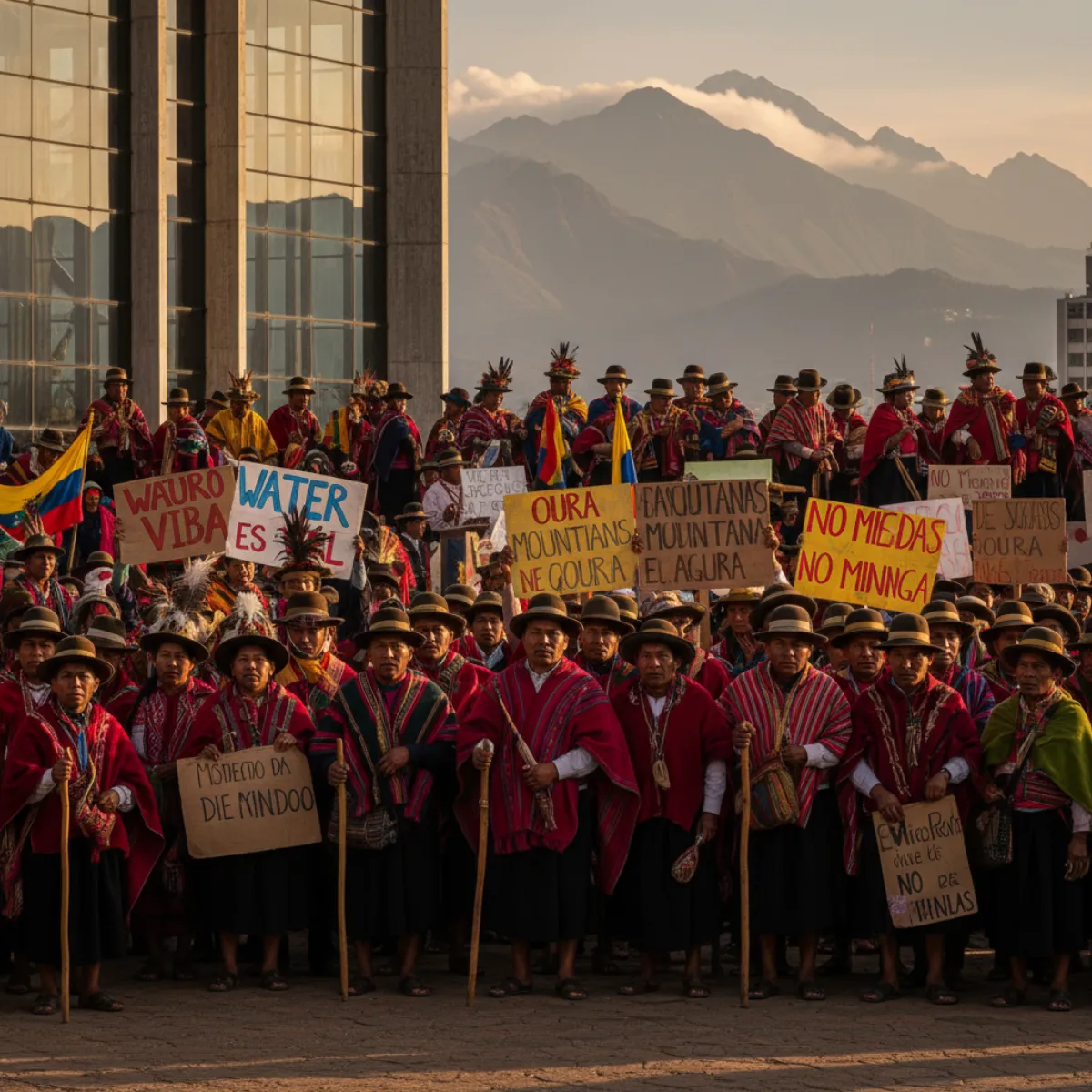
Ecuador's National Assembly passed a new mining and energy law 77-70 on February 26, replacing environmental licenses with simplified authorizations and allowing rock extraction in the Galapagos Islands. CONAIE and environmental groups are protesting the changes as a rollback of decades of conservation policy.
An electoral judge suspended Citizens' Revolution (RC), former President Rafael Correa's party, for nine months — just two days after a complaint was filed and without a defense hearing. The timing effectively bars the party from registering candidates for 2027 local elections.
Ecuador's Constitutional Court declared the SECA trade agreement with South Korea compliant on March 19. The deal grants tariff-free access for 98.8% of Ecuadorian products and covers investment, technology transfer, energy, and infrastructure cooperation.
The United States and Ecuador formally signed their Agreement on Reciprocal Trade on March 13, 2026, cutting tariffs on 53% of non-oil exports worth $2.8 billion. Key sectors including bananas, shrimp, cocoa, coffee, and flowers get preferential access, while Ecuador eliminates its price band system on U.S. agricultural imports.
President Noboa's executive decree MDT.2026-059 allows employers to schedule 10-hour workdays within the existing 40-hour weekly cap. Unions were not consulted, and mass protests erupted on March 13 in Quito and Guayaquil. Noboa's approval rating has dropped to 38%.
Ecuador's National Assembly voted 116–0 to censure and remove Judicial Council president Mario Godoy for 'manifest ineffectiveness' — a rare unanimous decision that could reshape how the courts handle visa cases, property disputes, and legal proceedings.
Indigenous leader Marlon Vargas calls President Noboa's urgent mining and energy reform a threat to water, territories, and collective rights. The National Assembly has until March 2 to vote on the bill, and CONAIE is calling for unity against it.
Ecuador's Constitutional Court has determined that the trade agreement negotiated with South Korea requires a full legislative vote before ratification — a higher procedural bar than the recently concluded U.S. deal.