Salinas Property Owners Face Growing Flood Risk as Sea Levels Rise and Waves Batter the Coast

If you own coastal property in Ecuador, this is the story you need to read.
The Pattern
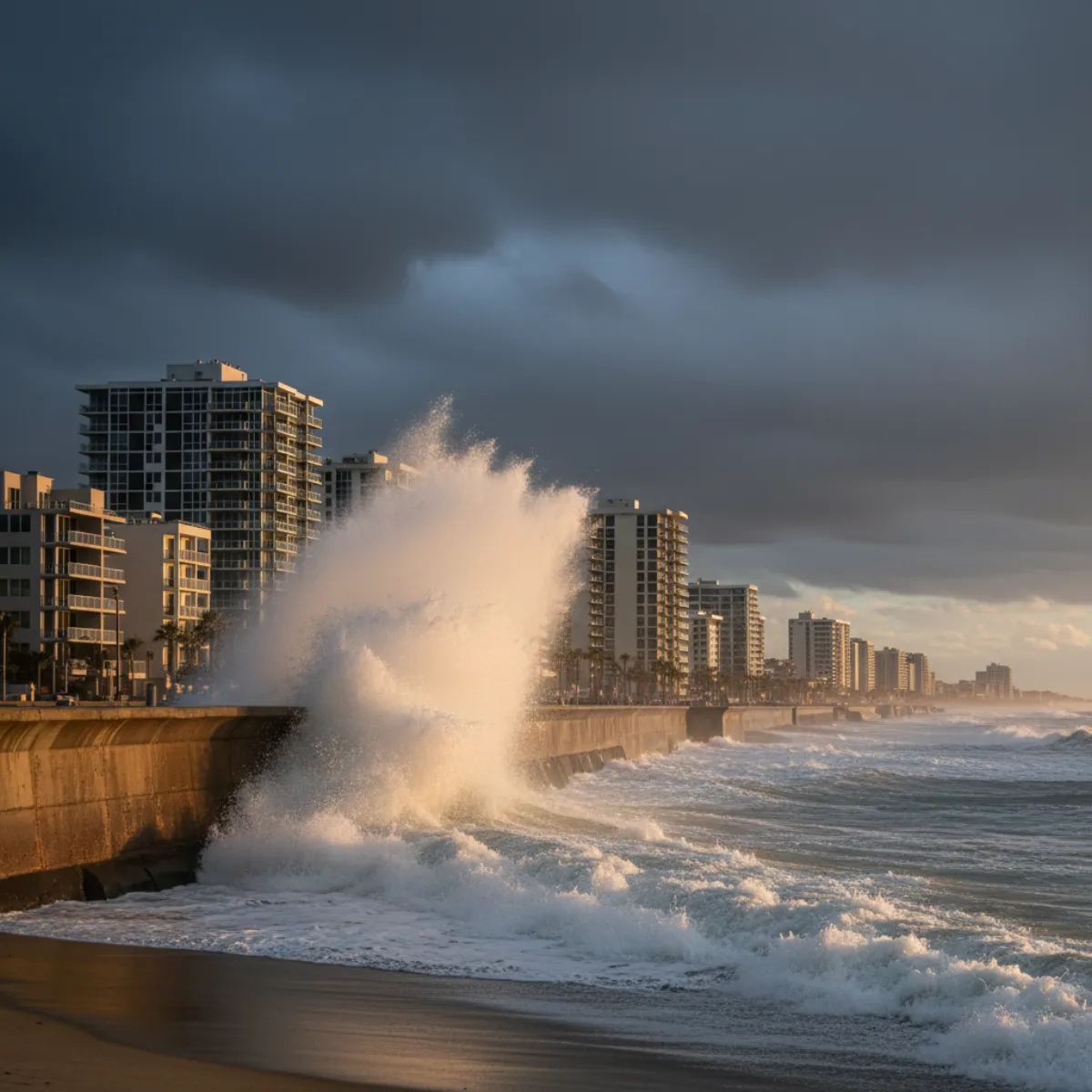
Salinas and the southern coast of Ecuador are experiencing a recurring cycle of wave-driven flooding that is damaging high-rise condominiums, destroying sea walls, and raising serious questions about the long-term viability of oceanfront real estate.
The most dramatic recent events saw waves breach sea walls in Salinas and Punta Blanca, flooding homes, businesses, and the first floors of several high-rise condominiums. In Punta Blanca, sea walls and beachfront structures were completely destroyed.
Management teams at five high-rise condominium buildings reported flooded lobbies and inundated underground parking facilities, with vehicles sustaining water damage. A Salinas tourism official reported "major economic losses in many oceanfront locations." At the Port of Salinas, an unknown number of boats were damaged, with at least two fishing vessels totally destroyed.
This comes on top of yesterday's INOCAR aguaje warning for the entire coastline, with another powerful spring tide forecast for February 27 – March 3 that could bring waves up to 2.0 meters near Galápagos and 1.7 meters on the continental coast.
The Science
Kléver Pacheco, former assistant director of Ecuador's Geophysical Institute (Instituto Geofísico de la Escuela Politécnica Nacional), has been warning about this for years. His assessment is sobering:
- Sea levels in Salinas and Santa Elena have risen 39 centimeters since records began in the 1970s
- The causes are a combination of global sea level rise, bay siltation, and underwater dislocation caused by shifting tectonic plates along Ecuador's active Pacific coast
- The problem will only get worse with time
Pacheco is particularly concerned about poor construction standards in condominiums built near the ocean. He cites extensive saltwater intrusion under buildings, which can compromise structural integrity over decades — drawing explicit comparisons to the Champlain Towers collapse in Surfside, Florida, in 2021, where saltwater corrosion of underground concrete was identified as a contributing factor.
The Broader Risk
Ecuador's coast is uniquely vulnerable:
- Tectonic activity — Ecuador sits on the Pacific Ring of Fire, meaning earthquakes and submarine plate shifts can change underwater topography and wave patterns
- El Niño cycles — Periodic warming events bring higher sea levels, stronger storms, and accelerated coastal erosion
- Rapid coastal development — Construction has outpaced building codes in many beach communities, with condos built too close to the waterline
- Limited flood insurance — Ecuador has no equivalent to the U.S. National Flood Insurance Program. Property owners bear the full cost of flood damage
In 2025 alone, severe floods and landslides killed 48 people and damaged nearly 60,000 homes across 23 of Ecuador's 24 provinces.
What This Means for Expats
Confused about which visa fits your situation? Book a 30-minute consultation with Chip for $100 and leave with a clear plan.
Book a consultation- If you own coastal property: Review your insurance coverage immediately. Standard policies in Ecuador typically do not cover flood or wave damage unless specifically added. Ask your insurer about coverage for "daños por oleaje" (wave damage)
- If you're buying coastal property: Hire an independent structural engineer to assess saltwater exposure and foundation integrity. Don't rely on the developer's assessment alone. Check the building's history of flood events
- Consider elevation. Properties above the second floor and away from underground parking are significantly less exposed. Ground-floor and basement-level units are highest risk
- Punta Blanca and Chipipe (the westernmost point of Salinas) are among the most exposed neighborhoods. Properties set back from the waterline or on higher ground face less risk
- The next wave event is imminent. INOCAR has forecast another aguaje for February 27 – March 3. If you're on the coast, monitor conditions at inocar.mil.ec
- Long-term outlook: With 39 cm of sea level rise already recorded and the trend accelerating, this is not a temporary problem. Factor climate risk into any coastal real estate decision
Sources: CuencaHighLife, INOCAR, Geophysical Institute of Ecuador, SNGR
More in Real Estate
View all →Keep practical Ecuador coverage free to read.
Reader support helps fund source monitoring, translation, editing, publishing, and national coverage for expats across Ecuador.
Need help with your Ecuador visa? EcuaPass handles the paperwork for you. Learn more →
Comments
No comments yet. Be the first to share your thoughts!