Heavy Rains Trigger Landslide and Flooding in Quito's La Bota — Homes Damaged, Water Cut

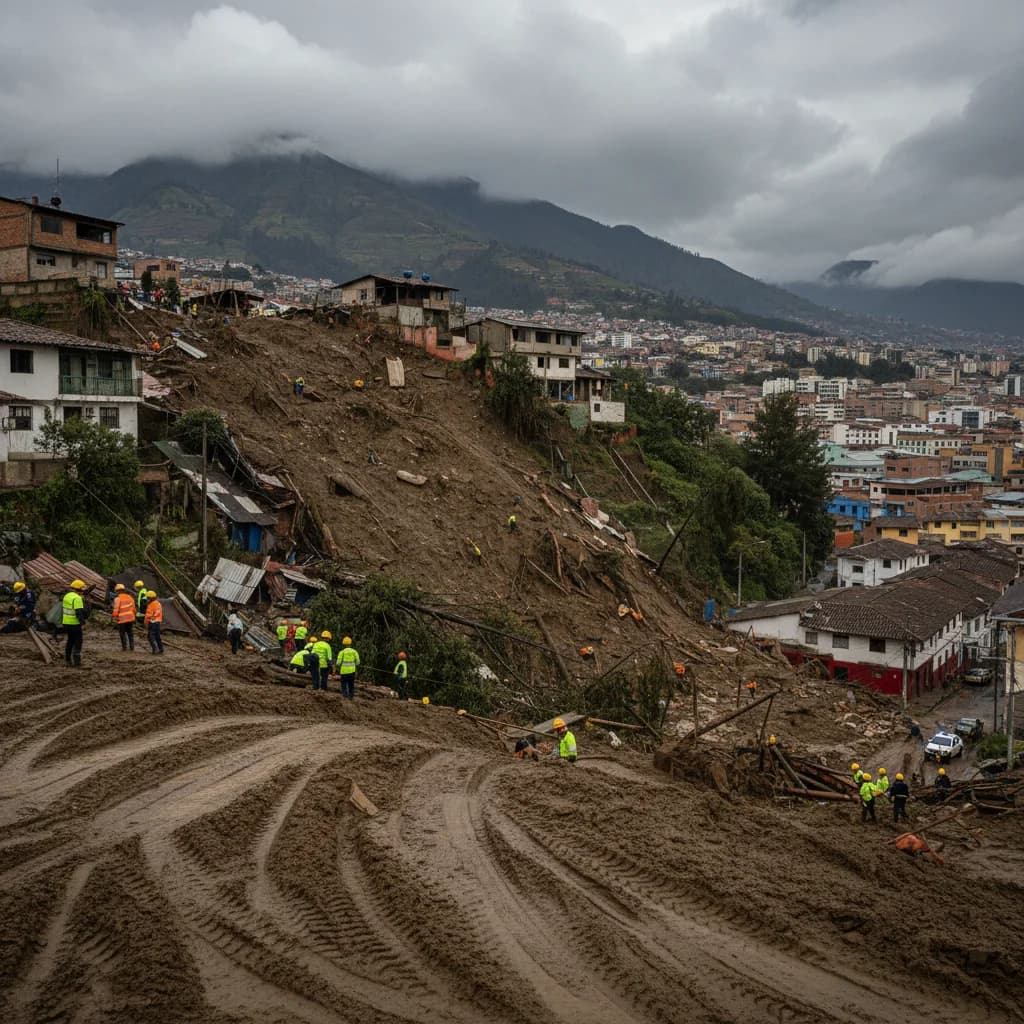
Quito woke up to emergency crews and muddy streets on Friday morning after a night of punishing rainfall.
What Happened
Heavy overnight storms on Thursday, February 12 triggered a landslide (derrumbe de talud) in Quito's La Bota neighborhood, located in the northern part of the city. The collapsed hillside damaged multiple homes and caused flooding in low-lying areas of the neighborhood.
No fatalities were reported, but:
- Several homes sustained structural damage
- Water service was interrupted in the affected area
- Emergency crews from the Cuerpo de Bomberos de Quito and the city's Metropolitan Emergency Operations Center (COE-M) responded through the night
The Broader Context
This is not an isolated event. Quito's Pichincha province is currently at red alert — the highest level — according to the Secretaría Nacional de Gestión de Riesgos (SNGR), Ecuador's national risk management agency.
The red alert is based on:
- Weather events already recorded in 2026
- Historical precipitation data for February, March, and April
- Short-term forecasts from INAMHI (Ecuador's meteorological institute)
February through April is the peak of the rainy season in Quito, and the combination of steep terrain, clay soils, and rapid urbanization makes hillside neighborhoods especially vulnerable.
Areas at Highest Risk
Quito sits in a narrow valley at 2,850 meters elevation, flanked by steep hills on both sides. The neighborhoods most vulnerable to landslides and flooding include:
- Hillside barrios in northern and southern Quito
- The valleys (Tumbaco, Cumbayá, Los Chillos) — vulnerable to river flooding during heavy rains
- Low-lying areas near quebradas (ravines) that channel water downhill
What This Means for Expats
Confused about which visa fits your situation? Book a 30-minute consultation with Chip and leave with a clear plan.
Book a consultation- If you live in Quito: Check whether your neighborhood is near a hillside, quebrada, or flood-prone zone. The COE-M publishes risk maps
- Valley residents (Tumbaco, Cumbayá): The Chiche, San Pedro, and Machángara rivers can rise rapidly during sustained rain. Stay away from riverbanks
- Practical steps: Keep emergency supplies accessible (flashlight, water, phone charger). Know your evacuation route. If you hear unusual sounds at night during heavy rain — cracking, rumbling, rushing water — get to higher ground immediately
- Infrastructure impact: Water service interruptions during landslides are common. Keep a reserve of drinking water at home during rainy season
- Emergency contacts: ECU 911 for all emergencies
Sources: El Comercio, Primicias, SNGR
More in Safety
View all →Ecuador Braces for Intensifying El Niño Rains from November 2026, Guayaquil Records Historic September Rainfall
September 15, 2026
Montañita Shooting Leaves One Dead, Four Foreigners Injured Amidst State of Exception in Santa Elena
September 14, 2026
New Curfew Imposed in Four Ecuadorian Provinces: No Safe-Conducts Issued
September 12, 2026
Keep practical Ecuador coverage free to read.
Reader support helps fund source monitoring, translation, editing, publishing, and national coverage for expats across Ecuador.
Need help with your Ecuador visa? EcuaPass handles the paperwork for you. Learn more →
Comments
No comments yet. Be the first to share your thoughts!