Daily coverage from across the country, written for the expat community
Results for “disease”Clear
IESS says Teodoro Maldonado Carbo Hospital allocated $435,083 for medications and supplies, including antibiotics, neonatal respiratory supplies, suction hoses and Tocilizumab. For expats using IESS or watching the public system, this is a concrete supply update with named purchases and dollar amounts.
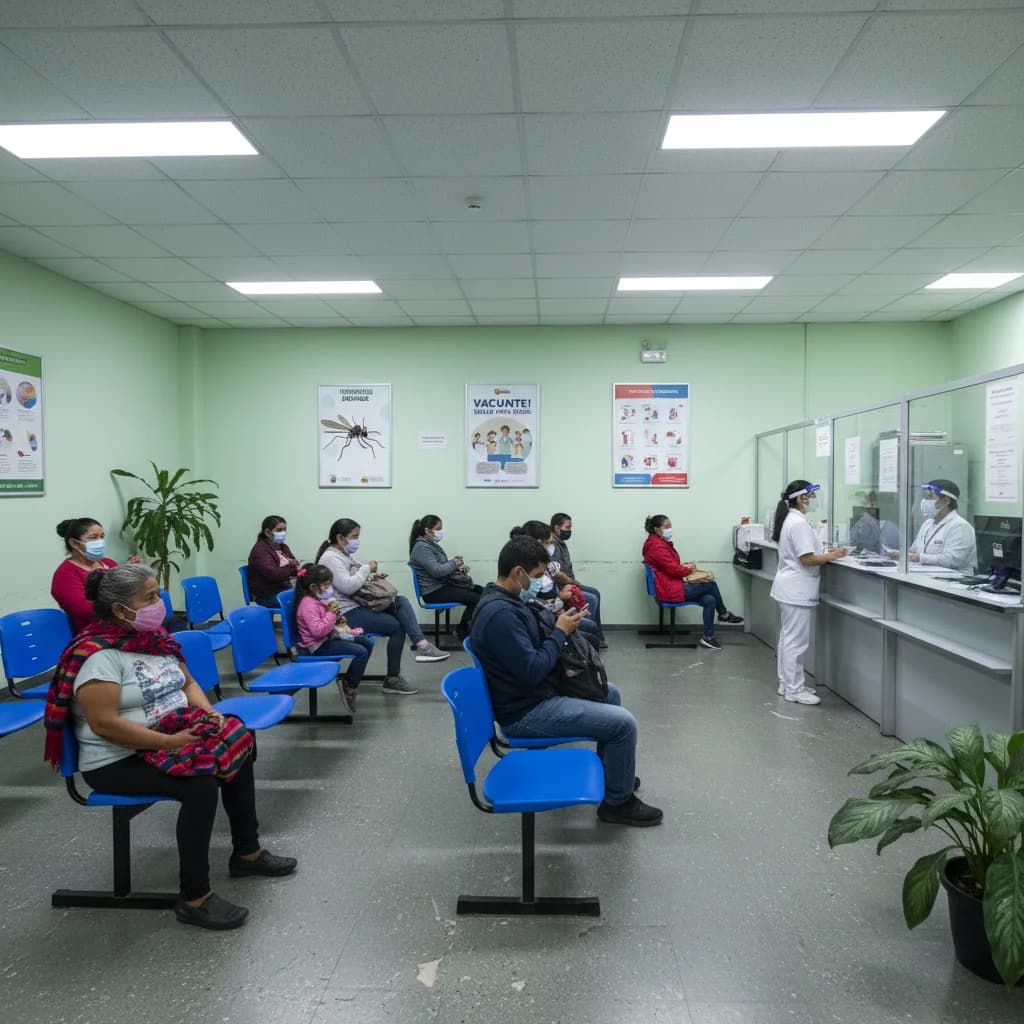
Ecuador is pushing measles vaccination for children with delayed doses after regional cases increased. PAHO has recorded 20,332 confirmed cases in 16 countries and territories in the Americas, while Peru has more than 500 confirmed cases.
Primicias reports Ecuador recorded 10,562 tuberculosis cases in 2025 and 676 deaths nationwide. The report says prisons accounted for 2,576 cases, highlighting a public-health problem concentrated inside the prison system.
President Daniel Noboa announced cabinet changes on April 20, installing Jaime Bernabé Erazo as Minister of Health effective immediately. The Ministry of Environment and Energy will receive a new minister on April 30, with the current officeholder stepping down.
Ecuador's Ministry of Public Health has launched dengue prevention interventions across 1,500 critical sectors in seven provinces, with 945 confirmed cases reported in early 2026. Sucumbios, Guayas, Esmeraldas, and Pichincha are the hardest hit as the rainy season continues.
Ecuador shipped 125,200 tonnes of shrimp in January 2026, a 23% increase year-over-year. China remains the top buyer at 49.5% of volume, though its share has declined from 54.2% in 2024. The industry projects a 15% increase for the full year.
Ecuador is positioned to become the world's second-largest cocoa grower behind Cote d'Ivoire. Anecacao projects exports exceeding 623,000 metric tons in 2026, up from 375,720 MT in 2023. The country is targeting 800,000 MT by the end of the decade.
Despite a 2023 referendum and an Inter-American Court of Human Rights order to stop drilling, Ecuador continues pumping 44,000 barrels per day from Block 43 in Yasuní National Park. HRW documented 29 oil spills and contaminated water affecting uncontacted indigenous groups.
Ecuador's Federation of Exporters (Fedexpor) projects 6-7% export growth for 2026, a significant slowdown from the 18% surge in 2025. Headwinds include US tariff uncertainty, the Colombia trade dispute, and falling cacao prices — but the new US trade deal and flower sector expansion offer upside.
Ecuador’s annual inflation rate hit a 20-month high in January 2026, driven almost entirely by a 20.79% spike in housing and utility costs after the government ended electricity and diesel subsidies. Food prices are rising too — plantains have roughly doubled, and the basic family basket now costs $822 a month.
Ecuador’s TB crisis went from bad to alarming in 2025. Deaths jumped 127%, confirmed cases rose 67% to 9,142, and health experts warn this is no longer just a prison problem — community transmission is driving the surge.