Daily coverage from across the country, written for the expat community
Results for “constitution”Clear
Ecuador’s Constitutional Court issued a favorable opinion on the state of exception declared by President Daniel Noboa. The measure validates Executive Decree 423, signed June 16, for 60 days.
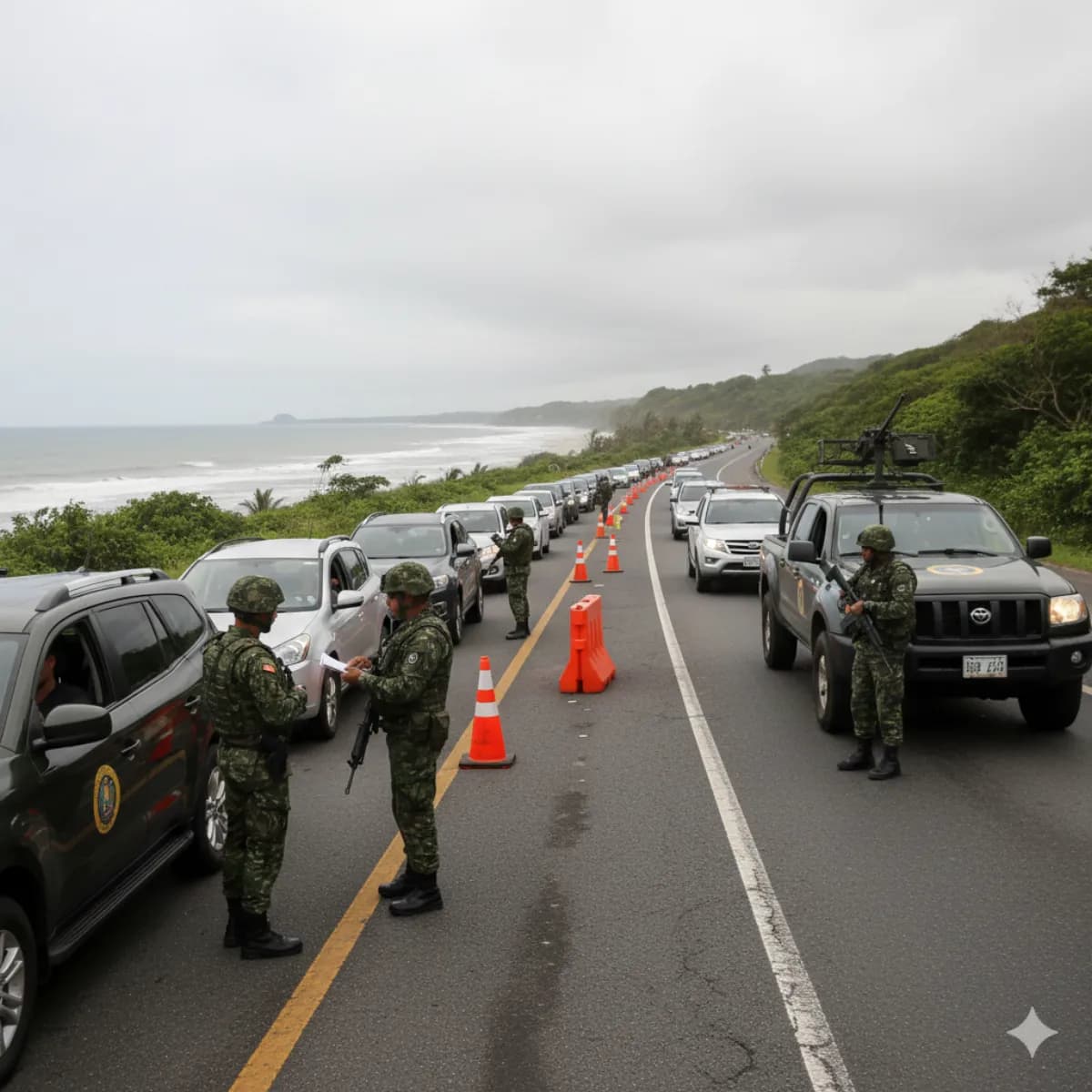
Ecuador’s new state of exception applies for 60 days in ten provinces and three cantons. There is no curfew for now, but the decree allows temporary limits on home and correspondence protections while security forces operate in the covered areas.
President Noboa ratified the SECA trade agreement with South Korea via Decreto Ejecutivo 359 on April 15, two days after the Asamblea approved it 83 votes. The deal eliminates tariffs on 98.9% of Ecuadorian exports to a 51-million-consumer market. Shrimp goes to 0% immediately. Bananas phase out over five years. Here's what's in it.
President Noboa presented Q1 2026 economic results in a national broadcast. Sales hit $63.2 billion (vs $57.7B Q1 2025). Country risk dropped from 1,908 bps a year ago to 416 today. Public investment jumped from $42M to $533M YoY. Here's what the government is claiming and what to actually take from it.
Ecuador's Constitutional Court ruled unanimously (9-0) that President Noboa cannot fast-track the bilateral investment treaty with the UAE. The ISDS provisions trigger constitutional review, and the treaty must be approved by the National Assembly. Investors tracking the UAE corridor should expect delays.
President Noboa said Ecuador would welcome US military troops to fight organized crime, provided they operate under Ecuadorian Armed Forces command. Joint operations are already underway, including Pacific naval exercises with the USS Nimitz and a border strike against Comandos de la Frontera.
President Noboa signed Decreto 353 on April 2, declaring a 60-day state of exception across nine provinces and four cantons. Warrantless searches are now legal in affected areas, though no curfew has been imposed. Expats in Pichincha, Guayas, Manabi, and other covered provinces should understand what rights have been suspended.
Ecuador's National Assembly passed a new mining and energy law 77-70 on February 26, replacing environmental licenses with simplified authorizations and allowing rock extraction in the Galapagos Islands. CONAIE and environmental groups are protesting the changes as a rollback of decades of conservation policy.
An electoral judge suspended Citizens' Revolution (RC), former President Rafael Correa's party, for nine months — just two days after a complaint was filed and without a defense hearing. The timing effectively bars the party from registering candidates for 2027 local elections.
Ecuador's Constitutional Court declared the Strategic Economic Cooperation Agreement (SECA) with South Korea constitutional, clearing the final legal hurdle. 98.8% of Ecuador's exportable products will enter Korea tariff-free, opening access to 51 million consumers.
Ecuador's Constitutional Court declared the SECA trade agreement with South Korea compliant on March 19. The deal grants tariff-free access for 98.8% of Ecuadorian products and covers investment, technology transfer, energy, and infrastructure cooperation.
A new Human Rights Watch report accuses the Ecuadorian government of continuing oil extraction in Yasuní National Park despite a 2023 referendum and Constitutional Court order to stop. The case raises serious questions about the rule of law in Ecuador.