Quito Water Bills Spike Over 300% After City Bundles Garbage Collection Fee Into Water Invoices

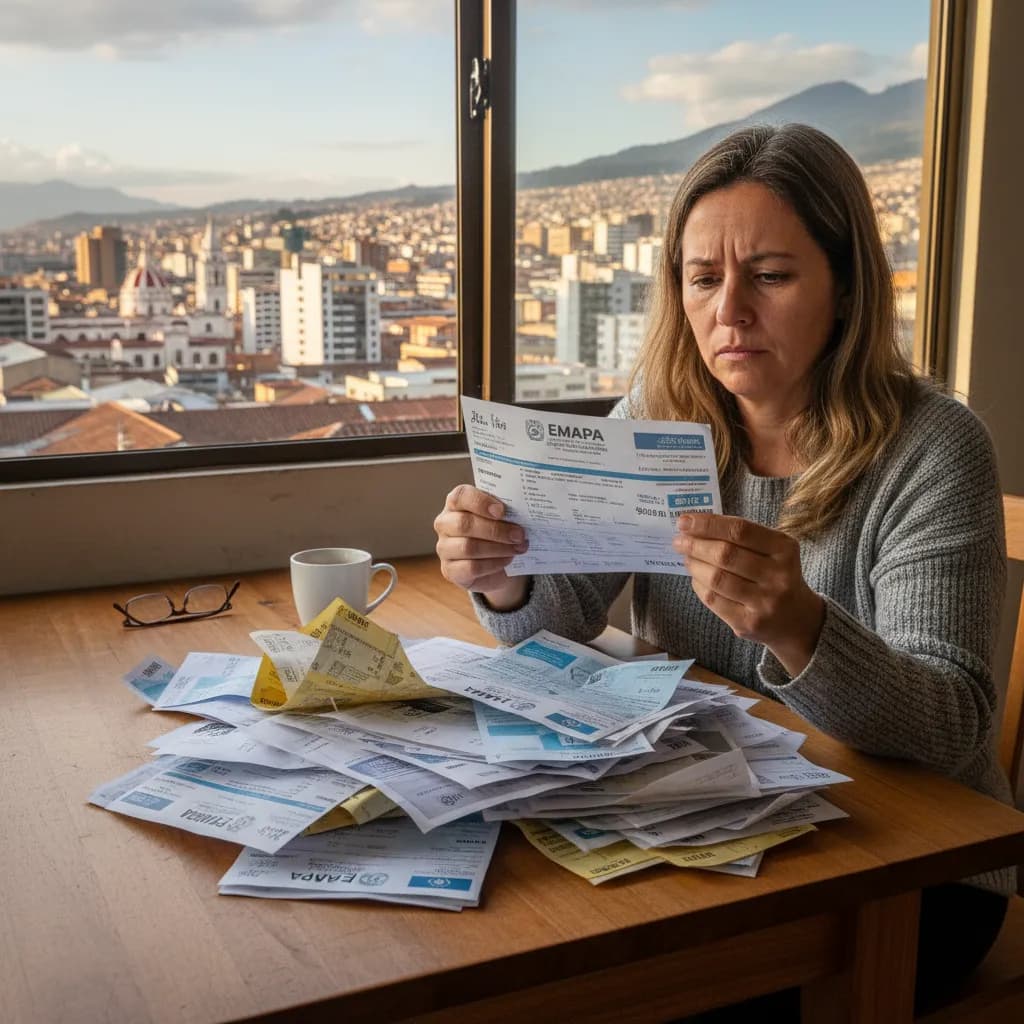
Residents across Quito are raising alarms after receiving water bills that increased by 300% or more in February. The cause: the municipality's decision to move the garbage collection fee (tasa de recolección de basura) from the electricity bill to the water bill, effective February 1, 2026.
What Changed
Previously, Quito's garbage collection fee was bundled into the Empresa Eléctrica Quito (EEQ) electricity bill — a system that had been in place for years. Starting this month, the fee is now calculated based on water consumption and added to the EPMAPS (Empresa Pública Metropolitana de Agua Potable y Saneamiento — Quito's water utility) invoice.
The municipality justified the switch with a study showing a 92.49% statistical correlation between water consumption and waste generation — arguing that households that use more water also produce more garbage.
Why Bills Are So High
The spike is not a billing error, according to Mayor Pabel Muñoz, who stated: "In some cases, it's not a mistake."
The problem is structural:
- Many apartment complexes and housing developments (conjuntos habitacionales) share a single water meter for dozens — sometimes hundreds — of units
- The garbage fee is calculated on the total water consumption of that shared meter, producing a single massive charge
- Individual households then see the full complex charge on their bill before internal distribution
For example, a resident of the El Batán neighbourhood reported that their garbage fee jumped from $3.67 to $15 per month — a more than 300% increase.
The Math Behind the Shock
The new formula ties the garbage fee directly to cubic meters of water consumed. For a single-family home with its own meter, the increase may be modest. But for buildings on shared meters:
- A complex of 100 units consuming 500 cubic meters collectively generates a single garbage charge that appears enormous on one bill
- The internal distribution among unit owners is left to the building administration — not the utility
What This Means for Expats
Confused about which visa fits your situation? Book a 30-minute consultation with Chip and leave with a clear plan.
Book a consultationIf you live in Quito — particularly in apartment buildings, condos, or gated communities in neighbourhoods like El Batán, Cumbayá, Tumbaco, or González Suárez — here's what to watch:
- Check your February water bill carefully — the garbage fee will appear as a new line item
- Contact your building administration to understand how the shared-meter charge is being divided among residents
- Single-family homes with individual meters will see smaller increases, likely in the $5-15 range depending on consumption
- Budget adjustment: For most expat households, expect an additional $10-20/month in water/garbage costs. For larger properties or those in complexes with shared meters, the impact could be higher until building administrators sort out equitable distribution
- This does not affect Cuenca, Guayaquil, or other cities — the change is specific to Quito's municipal garbage collection system
Sources: Expreso, Teleamazonas, Primicias
More in Economy
View all →Ecuador Businesses Asked to Use Generators Voluntarily as the Dry Season Begins
September 10, 2026
Store-Credit Reporting Gaps Put the Paperwork Behind Installment Purchases in Focus
September 10, 2026
Study Finds the Widest Financial Gaps Among Women, Young People, and Rural Ecuadorians
September 8, 2026
Keep practical Ecuador coverage free to read.
Reader support helps fund source monitoring, translation, editing, publishing, and national coverage for expats across Ecuador.
Need help with your Ecuador visa? EcuaPass handles the paperwork for you. Learn more →
Comments
No comments yet. Be the first to share your thoughts!


