Metro de Quito Hits 172,000 Daily Passengers as Private Car Use Drops 12%

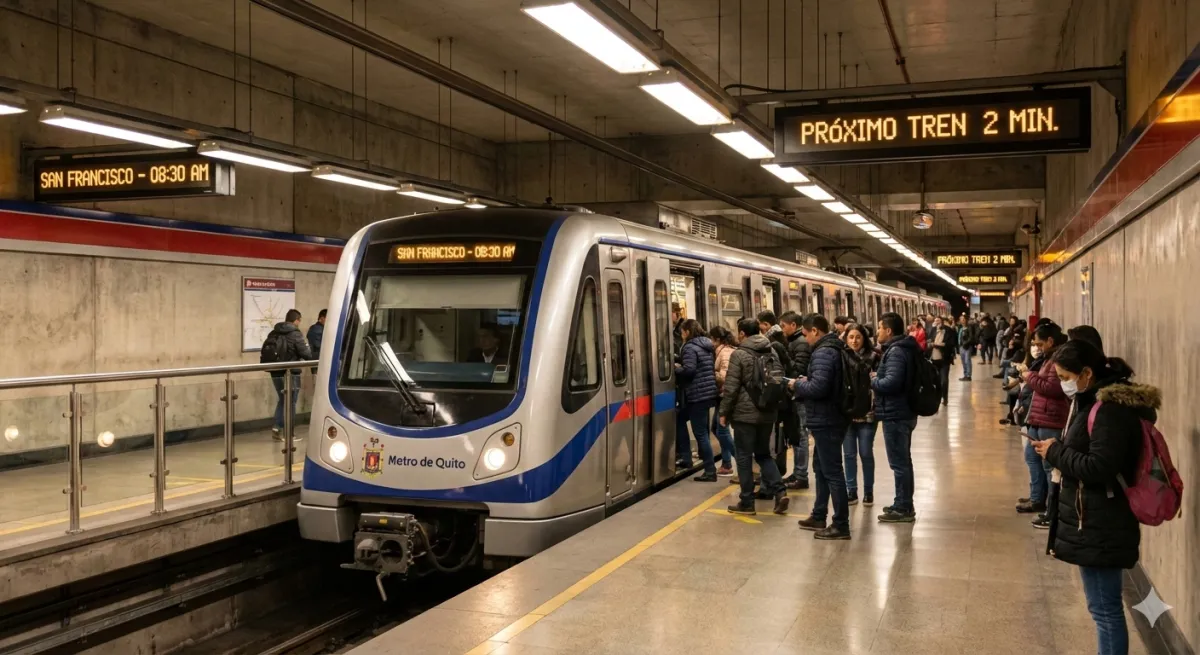
The Metro de Quito -- Latin America's highest-altitude metro system at 2,850 metres above sea level -- has reached 172,000 daily passengers as of early February 2026, exceeding its initial projection of 141,000 by 22%.
The system began full commercial operations in November 2025 and runs 22 km from Quitumbe in the south to El Labrador in the north, with 15 stations.
The Numbers
| Metric | Value | |---|---| | Daily passengers | 172,000 | | Peak hour ridership | 28,400 (7-8 AM, southbound) | | Busiest station | El Recreo (18,200 daily boardings) | | Average trip length | 8.4 km (6 stations) | | On-time performance | 96.2% | | System capacity | 400,000/day (43% utilisation) |
The Traffic Impact
The most significant finding comes from traffic count data. Vehicle monitoring on corridors parallel to the Metro shows:
- Avenida 10 de Agosto: 12% reduction in peak-hour private vehicles
- Avenida Amazonas: 8% reduction in northbound evening traffic
- Avenida de los Shyris: 6% reduction in morning peak
That 12% reduction on 10 de Agosto translates to approximately 8,400 fewer car trips per day on that corridor alone.
Fare and Economics
The Metro charges $0.45 per trip (integrated with surface bus transfers at $0.10 additional). Daily fare revenue is approximately $77,400 -- covering about 65% of operational costs in year one.
The system cost approximately $2.1 billion over 12 years, funded by the World Bank, European Investment Bank, and CAF.
Remaining Challenges
- Last-mile connectivity: Several stations lack adequate bus integration or bicycle parking
- Northern extension: The planned 5 km extension to Carapungo remains unfunded
- Revenue gap: The 35% operational cost gap requires ongoing municipal subsidy
What Expats Should Know
If you live in or visit Quito regularly:
- The Metro works and works well. At $0.45 per trip, it's the cheapest and fastest way to move north-south through the city
- El Recreo station connects to the Trolebus system heading to the south
- For airport access: The Metro doesn't reach Tababela airport, but taking it to El Labrador and connecting by bus or taxi saves significant time vs. driving from central Quito
- Property values near Metro stations are already rising -- if you're considering buying in Quito, Metro proximity is worth paying attention to
Source: El Telegrafo
More in Economy
View all →Ecuador Businesses Asked to Use Generators Voluntarily as the Dry Season Begins
September 10, 2026
Store-Credit Reporting Gaps Put the Paperwork Behind Installment Purchases in Focus
September 10, 2026
Study Finds the Widest Financial Gaps Among Women, Young People, and Rural Ecuadorians
September 8, 2026
Keep practical Ecuador coverage free to read.
Reader support helps fund source monitoring, translation, editing, publishing, and national coverage for expats across Ecuador.
Need help with your Ecuador visa? EcuaPass handles the paperwork for you. Learn more →
Comments
No comments yet. Be the first to share your thoughts!


