Ecuador Shuts Down Mining in Three Provinces: Narco Gangs, Toxic Rivers, and 1,700 Hectares of Destroyed Forest

Ecuador's government dropped a significant enforcement hammer on February 2, indefinitely suspending mining operations across three provinces after documenting severe environmental damage and deep ties between illegal mining and organized crime.
For expats, this story matters because it reveals the scale of Ecuador's illegal mining crisis—and connects directly to broader debates about mining, water, and environmental protection that affect the entire country.
What Happened
Environment and Energy Minister Inés Manzano announced the suspension of all mining activities in the Amazonian province of Napo and restrictions on mineral processing plants in El Oro and Loja. The suspension is indefinite—it remains in place until operators resolve compliance issues with regulations, permits, and environmental requirements.
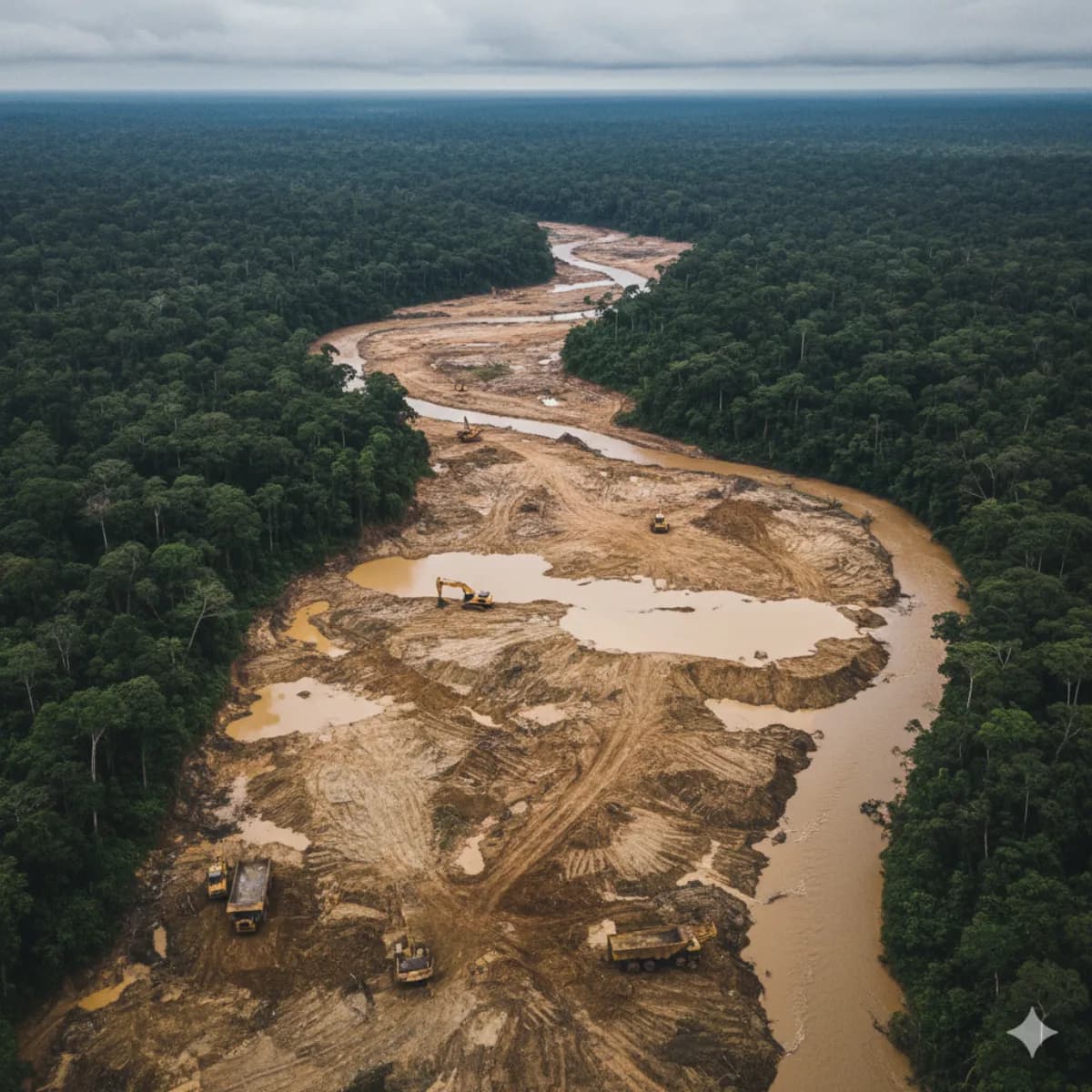
Manzano was blunt about the scope of the problem: the Napo River, one of the major tributaries of the Amazon and a waterway shared with Peru, has suffered serious contamination from illegal mining operations.
The Environmental Damage
The numbers are stark:
- Heavy metals including copper, lead, and arsenic detected above maximum permissible limits in the Napo River
- Cyanide contamination found in waterways near mining sites
- More than 1,740 hectares of forest destroyed in Napo province alone, according to satellite data from MAAP and the organization Ecociencia (as of June 2025)
- The contamination threatens not only local ecosystems but downstream communities in both Ecuador and Peru
The Cartel Connection
This isn't just an environmental story—it's a crime story. Illegal mining in Ecuador has become a major revenue stream for criminal organizations:
- Los Lobos — linked to Mexico's Jalisco Nueva Generación cartel
- Los Tiguerones — a major Ecuadorian criminal group
- Los Choneros — Ecuador's most notorious gang
All three organizations are actively involved in illegal gold extraction across multiple provinces. The gold is processed at plants in El Oro—particularly in the town of Portovelo—where ore allegedly extracted illegally from various parts of the country, including Napo, gets refined.
None of the three affected provinces host industrial-scale mines. Napo's mining concessions are primarily small-scale and alluvial, which has made them easier for criminal networks to exploit.
What Happens to the Seized Material
The government announced that all mineralized material seized during the shutdown will be handed to Enami, Ecuador's state mining company, for processing and commercialization. This effectively nationalizes the inventory while cutting off revenue to illegal operators.
The Bigger Picture for Ecuador
This crackdown comes at a sensitive moment for mining policy in Ecuador:
- In Cuenca, the fight over the Loma Larga gold project at Quimsacocha continues, with residents demanding full cancellation of the mining concession to protect the city's water supply
- Gold prices have surged near $5,000 per ounce in January 2026, making illegal extraction more lucrative than ever
- Ecuador is trying to position itself as a destination for responsible mining investment while simultaneously fighting a losing battle against criminal extraction
Minister Manzano acknowledged that restoring the Napo River will take "many years"—a sobering admission that the environmental damage already done is not quickly reversible.
What This Means for Expats
Confused about which visa fits your situation? Book a 30-minute consultation with Chip and leave with a clear plan.
Book a consultationMost expats won't feel direct effects from a mining shutdown in Napo province. But the story illuminates three things worth understanding about the country you live in:
-
Criminal diversification — Ecuador's gangs aren't just in the drug trade. Illegal mining is a major and growing revenue source, and the environmental cost is enormous.
-
Environmental governance — The government is willing to take aggressive enforcement action when environmental damage becomes undeniable. That precedent matters for ongoing debates about mining near water sources, national parks, and indigenous territories.
-
The gold price factor — At nearly $5,000/oz, gold creates powerful incentives for illegal extraction. Expect this tension between enforcement and criminal enterprise to intensify, not diminish.
For anyone following the Quimsacocha/Loma Larga debate in Cuenca, this national crackdown adds important context: the government is demonstrating it can shut mining down. Whether it will apply that same willingness to cancel the Loma Larga concession permanently remains the open question.
Sources: Reuters, BNamericas, Energy News, El Telégrafo
More in Breaking
View all →Keep practical Ecuador coverage free to read.
Reader support helps fund source monitoring, translation, editing, publishing, and national coverage for expats across Ecuador.
Need help with your Ecuador visa? EcuaPass handles the paperwork for you. Learn more →
Comments
No comments yet. Be the first to share your thoughts!