Guayaquil Port TPG Plans USD 50 Million Investment and Two New Cranes

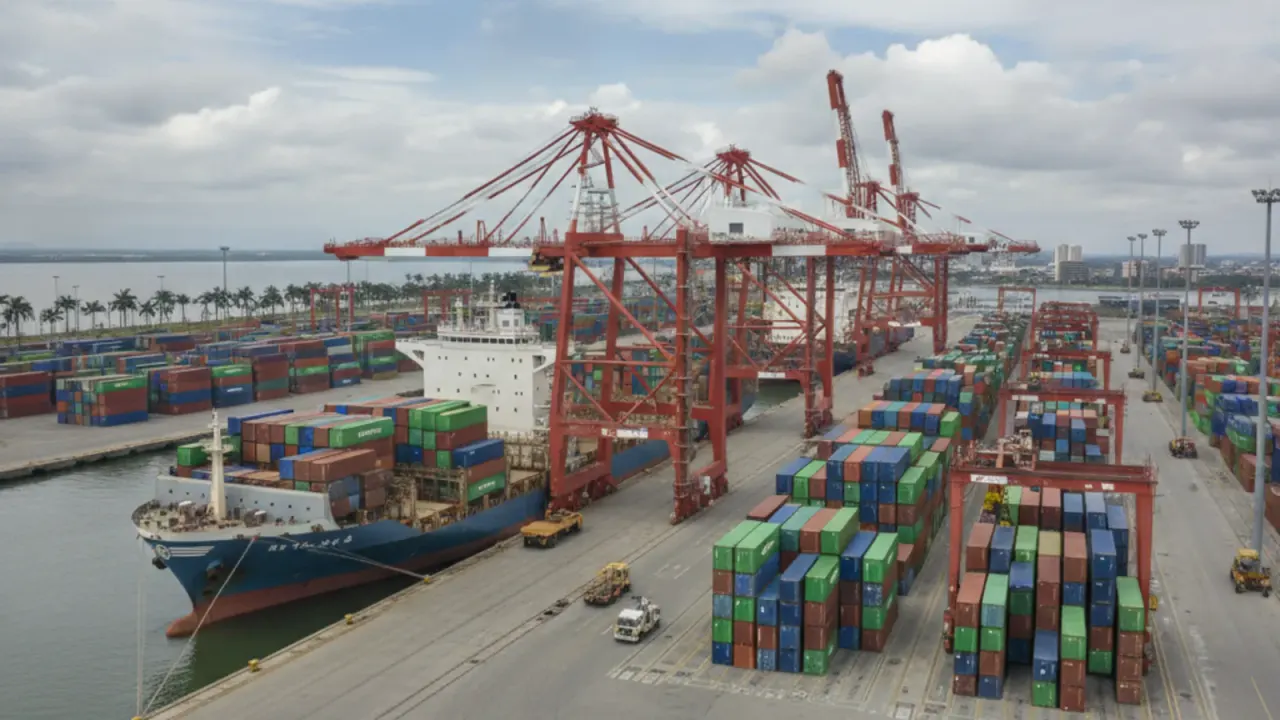
Terminal Portuario de Guayaquil (TPG) has announced a USD 50 million investment plan for 2026, including two new gantry cranes purchased for USD 22 million and an infrastructure expansion plan extending to 2031.
TPG is located in Isla Trinitaria, southwest of Guayaquil, and is the city's largest private port by cargo volume, according to the report. The port sector is growing at 20% annually, citing the Ministry of Infrastructure.
A competitive container market
TPG ranked second among Ecuador's ports for containerized cargo movement last year, based on market shares cited by the company. It handled 736,141 twenty-foot equivalent units (TEUs), representing 24% of the national market.
The port's volume placed it below Puerto de Posorja, operated by DP World, with about 30% of the market. It was close to the state-concessioned Puerto de Guayaquil, operated by Contecon, which held roughly 23% to 24%, according to the report.
Luis Enrique Navas, TPG's general manager, described the market as highly dynamic and competitive. TPG expects to maintain last year's cargo-movement levels and said its emphasis is on service quality rather than volume.
Contecon expects to exceed 900,000 TEUs this year. It had already moved 442,000 TEUs during the first half of the year, a 30% increase from the same period last year, helped by an alliance with Cosco that provides an Asia connection.
What the crane purchase changes
The two TPG cranes are Super Post Panamax structures purchased from a Chinese supplier. They are scheduled for installation at the end of next year and will reach across 24 rows to serve the largest merchant ships operating globally.
Once installed, the terminal is expected to move from five to seven operational cranes. The equipment is therefore part of a capacity and service plan, not simply a replacement purchase.
TPG also wants flexibility for the schedules of seven shipping lines operating at the terminal, with connections to Asia, Europe, the United States, and the Southern Cone. Those schedules can be affected by weather or operating conditions, which makes flexibility a practical part of the port's stated strategy.
The remaining investment
The other part of the USD 50 million plan includes an electrical substation to expand refrigerated-container connections for export products such as bananas and shrimp. TPG also lists electric tractors and vehicles, additional generators for contingencies, and an operating-system update to automate internal processes among its priorities.
For businesses, the immediate signal is that Guayaquil's private-port competition is being expressed through equipment, reefer capacity, connectivity, and operating resilience. The report does not quantify how the plan will change freight rates, export volumes, or port revenue.
What This Means for Expats
Foreign residents who work in Ecuador's trade, logistics, food-export, or manufacturing sectors should read this as a port-capacity and operating-investment story. The announced investment does not guarantee lower prices or faster deliveries, but it identifies the infrastructure areas TPG is prioritizing: cranes, refrigerated containers, backup generation, electric vehicles, automation, and shipping-line flexibility.
The indicators to follow are the crane installation timing, the move from five to seven operational cranes, and whether TPG maintains the cargo levels reported for last year while the wider port market continues to expand.
Source: Primicias
Report an article problem
Tell us what seems wrong or outdated. Include your email so we can follow up if needed.
More in Economy
View all →Ecuador's Population to Undergo Significant Shift by 2050, Projecting an Older Demographic
October 18, 2026
Ecuador Announces Widespread Electrical Maintenance Across 15 Provinces on October 17
October 17, 2026
Ecuador's Economy Shows Robust Growth with Sales Surpassing $11.5 Billion in Early October 2026
October 16, 2026
Keep practical Ecuador coverage free to read.
Reader support helps fund source monitoring, translation, editing, publishing, and national coverage for expats across Ecuador.
Need help with your Ecuador visa? EcuaPass handles the paperwork for you. Learn more →
Comments
No comments yet. Be the first to share your thoughts!