Ecuador Boosts Power Supply with Additional Barges Amid Energy Concerns, Targeting Industrial Sector

Ecuador is set to enhance its electricity generation capacity by incorporating two additional power-generating barges starting next week, specifically between September 21 and 22, 2026. This initiative comes as the nation faces reduced reservoir reserves and implements measures to manage demand from large consumers.
Minister of Environment and Energy, Juan Carlos Blum, confirmed on September 18, 2026, in Guayaquil, that these units are already within the country. The government's objective is to re-contract these barges primarily to serve the industrial sector. While formal tenders for other units, such as Emre Bey and Erin Sultan, are still underway, the government intends to utilize payment agreements to deploy these two available barges immediately. The new contracts are expected to be for an initial period of six months, with a key requirement being the immediate operational availability of the units.
Currently, Ecuador relies on one floating unit for energy supply. The country's thermal power capacity stands at approximately 900 megawatts (MW), which covers about 20% of an average demand of 4,487.9 MW, according to data from the National Electricity Operator (Cenace). This current thermal generation is notably lower than the approximately 1,200 MW recorded in the early months of 2026. This reduction is attributed to the termination of contracts for two previous barges, which collectively contributed 200 MW, and an incident that rendered the Esmeraldas I plant (125 MW) inoperable.
Minister Blum clarified that the electricity generated by these newly incorporated barges will be directed towards meeting industrial demand. Companies receiving this power will be required to pay its real cost. The minister indicated that generating electricity using these barge units costs approximately $0.24 to $0.25 per kilowatt-hour (kWh). This contrasts with the current charge of up to $0.12 per kWh for industrialists and the higher prices Ecuador has paid for electricity purchased from Colombia, which have ranged between $0.32 and $0.92 per kWh. The government is currently analyzing the specific tariff for these industrial consumers, with Blum suggesting it should be below $0.40 per kWh but not less than the barges' generation cost.
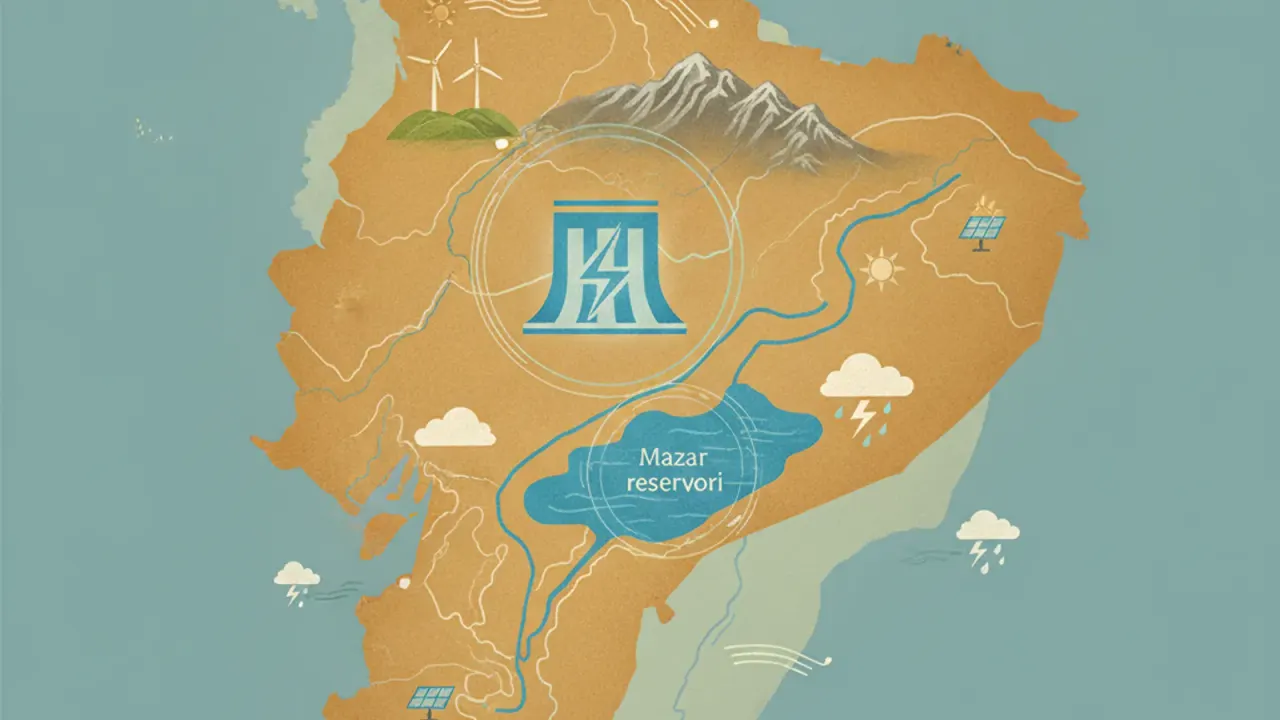
In a broader strategy to manage demand, the government anticipates that around 150 high-voltage AV1 consumers will reduce their electricity consumption. This could involve alternatives such as disconnecting from the grid one day per week, reducing usage during specific hours, or adjusting work schedules. Blum estimates that this scheme could alleviate between 600 and nearly 1,000 MW of demand, depending on the level of participation from these consumers. The overarching goal of these measures is to preserve the water reserves in the Mazar reservoir. Blum warned that without a reduction in demand from AV1 consumers, the Mazar reservoir's reserves might only last until mid or the third week of October, with the objective being to manage them to last until December. Looking ahead, a third barge, which will operate on gas and include fuel storage, is planned to be added to these units at a later stage.
What This Means for Expats
Confused about which visa fits your situation? Book a 30-minute consultation with Chip and leave with a clear plan.
Book a consultationWhile the immediate impact of these measures is primarily directed at the industrial sector, the overall stability of Ecuador's electricity supply is a significant concern for all residents, including expats. The government's proactive steps to secure additional generation capacity and manage demand are aimed at preventing widespread power outages or rationing that could affect households. The focus on industrial consumers paying the real cost of electricity from barges could help stabilize the national grid without directly increasing residential tariffs in the short term. However, a more stable energy supply benefits everyone by ensuring consistent access to essential services and supporting the broader economy. Expats should remain aware of national energy news, as the situation with reservoir levels and thermal generation can influence daily life, even if direct residential service disruptions are not immediately anticipated. The long-term goal of reaching December with sufficient water reserves in Mazar is crucial for avoiding more severe energy challenges in the coming months.
Sources: expreso.ec.
Image: existing site image, illustrative.
More in Economy
View all →Keep practical Ecuador coverage free to read.
Reader support helps fund source monitoring, translation, editing, publishing, and national coverage for expats across Ecuador.
Need help with your Ecuador visa? EcuaPass handles the paperwork for you. Learn more →
Comments
No comments yet. Be the first to share your thoughts!