Quito's Bus Fare Increase Hits A Rough First Debate

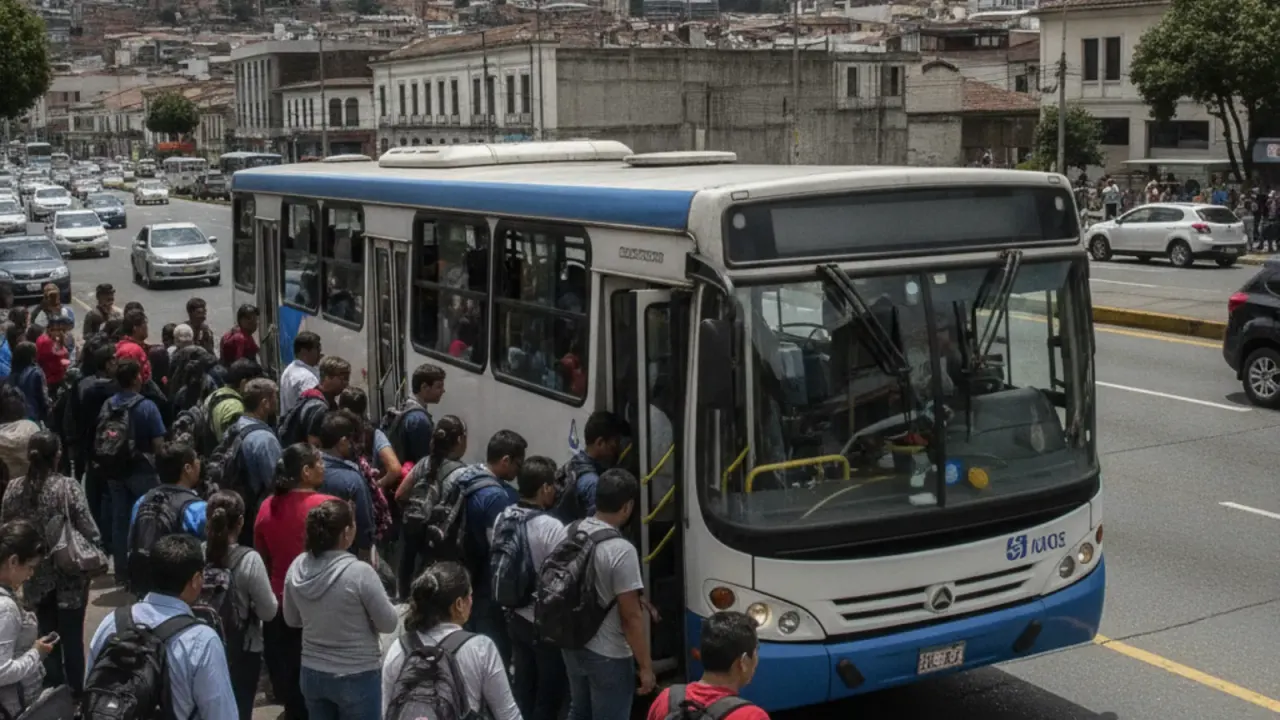
What happened
Quito's proposed bus-fare increase is moving through a difficult political process.
The first debate on an ordinance to raise the public-transport fare from 35 cents to 40 cents starting January 1, 2027 drew criticism from city council members and residents participating through the Silla Vacia mechanism.
The same proposal would also create a compensation mechanism for transport operators.
Why people pushed back
The session included 23 accredited citizens through Silla Vacia. Their objections focused on transparency, the use of public resources, service-quality guarantees, and the effect of the fare increase on users.
Several council members also argued that the city should not approve a higher fare without first requiring measurable service improvements.
Councilman Bernardo Abad pointed to the 2019 fare increase, saying that operators had previously promised cleaner, safer, more punctual buses with better frequency and that those commitments did not materialize.
Councilwoman Estefania Grunauer argued that residents should not be asked to pay more while receiving the same service. Councilman Fidel Chamba questioned the legality of the proposed compensation mechanism and raised concerns about the integrated collection system.
What citizens asked to see
Residents also questioned the fare methodology. Rocio Bastidas, speaking through Silla Vacia, asked for clearer information on the difference between the technical fare, a socially fair fare, the base fare, and the reference fare.
She also asked how the diesel-price increase was incorporated into the cost structure and called for visible, verifiable, auditable calculations.
Student representative Melina Zurita asked that the ordinance include measures for university students, including a differentiated fare.
What This Means for Expats
Confused about which visa fits your situation? Book a 30-minute consultation with Chip and leave with a clear plan.
Book a consultationFor foreign residents in Quito, this is a cost-of-living and mobility story, not just a city-hall argument. A five-cent increase sounds small, but daily transport costs matter for workers, students, retirees on fixed budgets, and anyone who uses buses as part of a no-car lifestyle.
The bigger issue is quality. Quito residents are not only debating price; they are debating whether operators should receive more revenue before service indicators improve.
If you rely on public transport in Quito, watch the next commission stage. The ordinance is not finished. The practical question is whether the city attaches enforceable service standards, student protections, and transparent fare calculations before the proposal reaches a final vote.
Source: La Hora.
More in Lifestyle
View all →Keep practical Ecuador coverage free to read.
Reader support helps fund source monitoring, translation, editing, publishing, and national coverage for expats across Ecuador.
Need help with your Ecuador visa? EcuaPass handles the paperwork for you. Learn more →
Comments
No comments yet. Be the first to share your thoughts!