Ecuador Bolsters El Niño Preparedness and Energy Security Amidst Reservoir Concerns

Ecuador is intensifying its preparations for the anticipated effects of the El Niño phenomenon, implementing both regional drills and national energy strategies to mitigate potential disruptions. The focus is on safeguarding critical infrastructure and ensuring a stable electricity supply across the country.
In the Azuay province, authorities from the Azuay Prefecture and the National Secretariat of Risk Management convened on Friday, September 18, to coordinate a comprehensive provincial drill. This exercise, scheduled for Tuesday, September 22, at 10:00 AM, aims to evaluate the region's response capabilities to various El Niño-related scenarios. The drill will specifically assess the Prefecture's capacity to react to potential impacts on provincial rural roads, damage or collapse of irrigation systems, and widespread floods.
Nationally, the Ministry of Environment and Energy is spearheading a plan to protect vital reservoirs and guarantee the energy supply. Minister Juan Carlos Blum announced on September 18 that this initiative is being developed in coordination with national industries. A key measure involves requesting approximately 150 high-voltage consumers, categorized as segment AV1, to voluntarily disconnect from the grid one day per week. This voluntary disconnection is expected to commence next week, with electricity distribution companies already contacting affected industries. The AV1 segment includes supply voltages at the delivery point ranging greater than 40 and less than or equal to 138 kilovolts (kV), while the AV2 segment covers voltages greater than 138 kV.
Further alternatives are being explored for the industrial sector, such as adjusting work weeks to Tuesday through Saturday or Sunday through Thursday. This strategy aims to leverage weekends, which typically experience lower electricity demand and reduced load on the system. To bolster the energy supply, two additional barges are currently in the process of being contracted through Sercop, initially for a six-month period. The electricity generated by these units will be allocated to meet industrial demand, with large consumers required to pay the real cost of that energy.
Industries that do not establish their own generation systems by December 15, as mandated by Executive Decree No. 32, will still have the option to remain connected to the national grid. However, they will be required to pay real prices for the electricity consumed. Executive Decree No. 32, issued by President Daniel Noboa in June 2025, granted high-voltage clients an 18-month period to implement their own generation systems, a deadline that expires on December 15. The Ministry is actively verifying the progress of self-generation efforts and is holding meetings with chambers and production guilds, particularly in Guayaquil and Durán, where 90% of high-voltage consumers are concentrated.
Reinforcement of the electrical system is also underway in Guayaquil. Work is progressing on the critical Aeropuerto distribution substation and the Ciudad Colón substation in the business park area, which CNEL is reactivating. Additionally, the inauguration of the Las Orquídeas transmission substation in Guayaquil is planned for October.
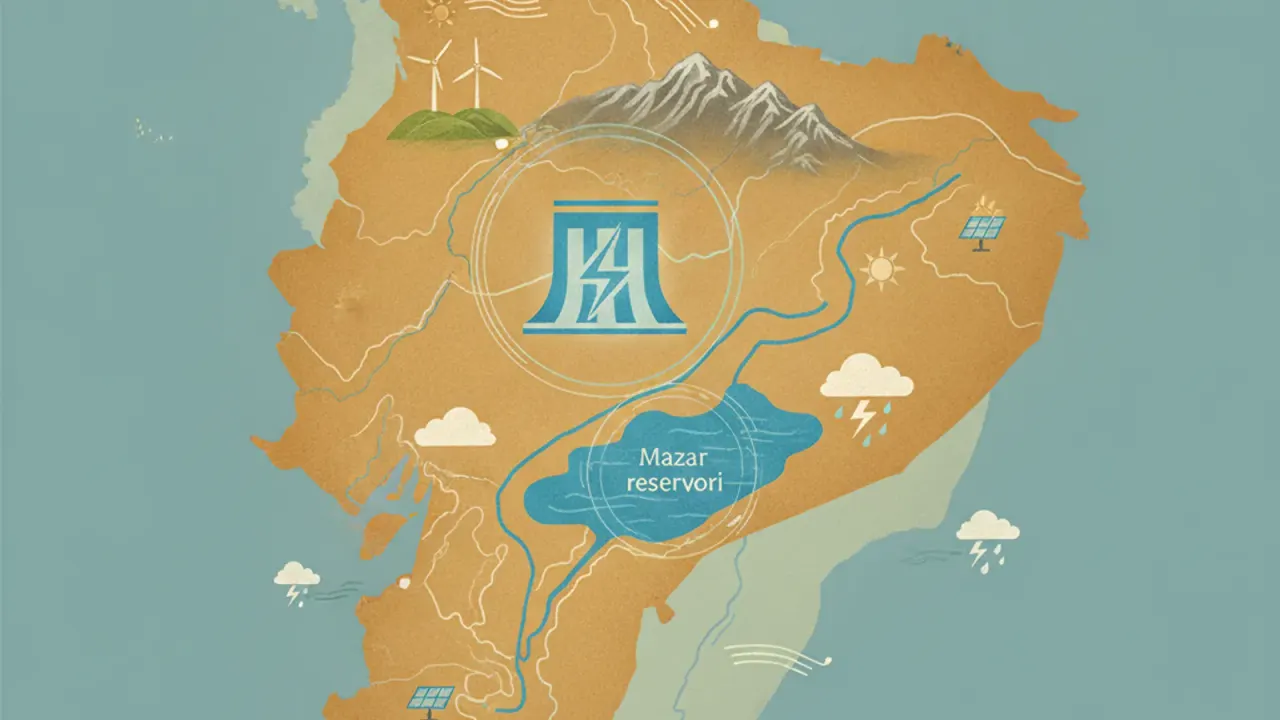
A significant concern is the status of the Mazar reservoir, a crucial component of Ecuador's electricity generation infrastructure. The Mazar reservoir feeds the Paute Integral hydroelectric complex, which comprises Mazar (170 MW), Molino (1,100 MW), and Sopladora (487 MW), collectively generating 1,757 MW and supplying approximately 40% of the national demand. As of September 18, 2026, at 17:00, the Mazar reservoir's water level was recorded at 2,137.96 meters above sea level (msnm), which is 25.96 meters above its minimum safe operating level of 2,112 msnm. Minister Blum attributed the reduction in Mazar's levels primarily to a lack of rainfall and an increase in electricity demand, particularly in the Coast region due to high temperatures. Current projections indicate that if the present rate of water usage continues and national electricity demand does not decrease, the Mazar reservoir could sustain operations only until mid or the third week of October 2026. The government's objective is for Mazar to last until December, aligning with the expected start of the rainy season.
What This Means for Expats
Confused about which visa fits your situation? Book a 30-minute consultation with Chip and leave with a clear plan.
Book a consultationFor foreign residents in Ecuador, these developments highlight the government's proactive approach to managing environmental and energy challenges. While the Azuay drill specifically targets provincial infrastructure, the national energy strategy has broader implications. The measures to stabilize the electricity supply, including voluntary industrial disconnections and the contracting of additional energy barges, are designed to prevent widespread power outages. Although these actions are primarily aimed at industrial consumers, a stable national grid benefits all residents. The focus on the Mazar reservoir underscores the importance of hydroelectric power in Ecuador and the potential for energy conservation efforts to become more prominent if water levels continue to decline. Expats should stay informed about local news regarding energy supply and any potential conservation advisories, particularly during the dry season and leading up to the expected start of the rainy season in December. The efforts in Guayaquil to reinforce the electrical system are positive steps towards improving reliability in a major urban center.
Sources: elmercurio.com.ec; eluniverso.com; expreso.ec.
Image: AI-generated illustration.
More in Economy
View all →Ecuador Businesses Asked to Use Generators Voluntarily as the Dry Season Begins
September 10, 2026
Store-Credit Reporting Gaps Put the Paperwork Behind Installment Purchases in Focus
September 10, 2026
Study Finds the Widest Financial Gaps Among Women, Young People, and Rural Ecuadorians
September 8, 2026
Keep practical Ecuador coverage free to read.
Reader support helps fund source monitoring, translation, editing, publishing, and national coverage for expats across Ecuador.
Need help with your Ecuador visa? EcuaPass handles the paperwork for you. Learn more →
Comments
No comments yet. Be the first to share your thoughts!


