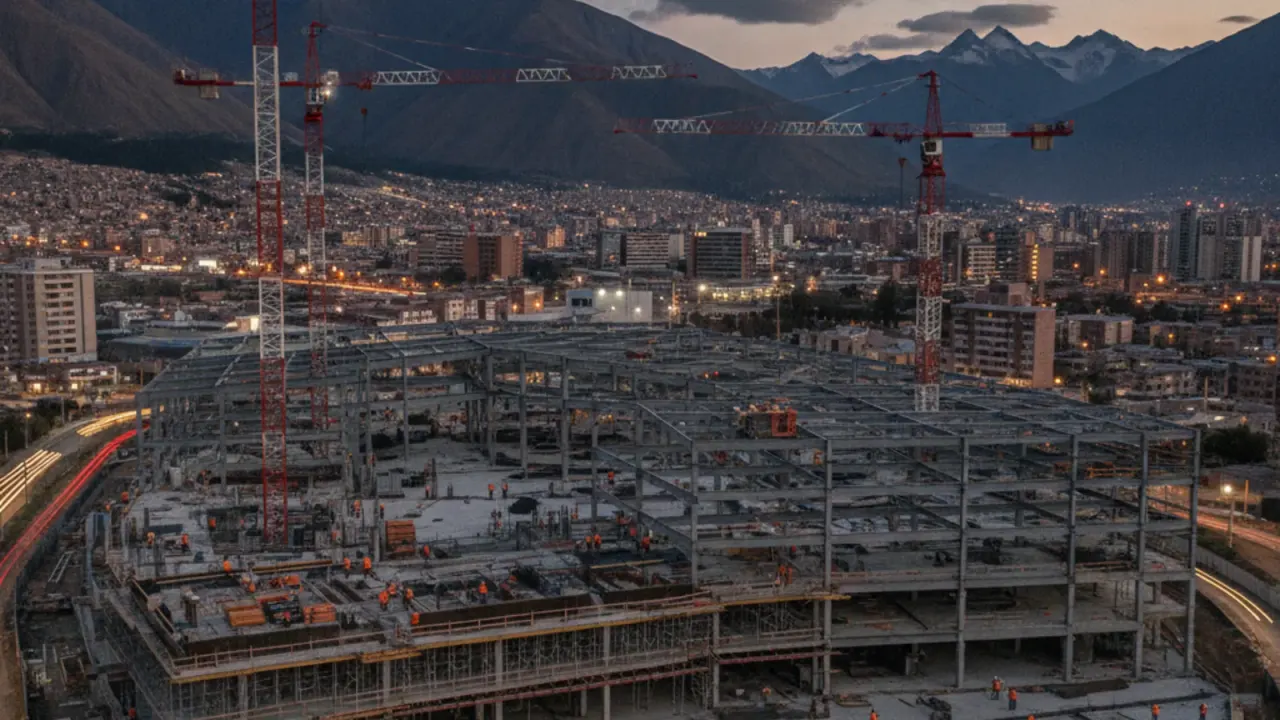
Mortgage Lending in Ecuador Rose 44% in the First Half of 2026


Mortgage lending has become one of the fastest-growing parts of Ecuador’s financial system. Between January and June 2026, private financial institutions disbursed USD 734 million in mortgage loans, 44% more than during the same period in 2025.
The Banco del Instituto Ecuatoriano de Seguridad Social (Biess) added USD 263 million in housing loans during the first six months of the year, an increase of 11% from the prior year. Together, private-bank and Biess housing finance reached USD 997 million in the first half of 2026.
The figures do not mean every applicant is receiving a loan or that every property market is moving at the same speed. They do show a meaningful expansion in the amount of financing reaching households that are looking to buy a home.
Why the credit number matters
Housing finance affects more than banks and buyers. A financed purchase activates a chain that includes builders, real-estate promoters, materials suppliers, finish manufacturers, architects, engineers, and workers in related services.
That is why mortgage disbursements are often read as a signal for construction and real-estate activity. When credit expands, projects that were waiting for buyers may move forward, and established businesses across the building supply chain may see more demand.
The market’s recent performance is being linked to a combination of lower interest rates, public financing programs, and a wider supply of credit. The programs specifically identified in the report include Miti Miti and CrediCasa from Biess.
The same report says mortgage disbursements increased 30% over the previous 12 months. That longer comparison supports the view that the first-half result is more than a single month’s jump, although the second half of the year will determine whether the recovery holds.
What buyers should not assume
The aggregate figures are not a personal approval promise. They do not provide a current mortgage rate, tell a buyer what documentation is required, or establish how quickly a bank or Biess will approve a particular application.
Foreign residents should also separate the national lending trend from their own eligibility. Before relying on a projected loan, confirm the lender’s current requirements, the treatment of foreign income, the required down payment, the property’s documentation, and the expected timeline. The headline growth rate is a market indicator, not a substitute for underwriting.
What This Means for Expats
For expats considering a purchase, the useful takeaway is that Ecuador’s housing-finance market is more active than it was a year earlier. That may expand the number of financed transactions and support construction activity, but it can also make desirable properties more competitive.
Watch the second-half disbursement data, the continuation of the 44% private-credit growth, and the performance of Miti Miti and CrediCasa. If the current pace remains in place, housing finance could finish 2026 among its strongest recent years. That is a favorable signal for market activity, not a guarantee that every buyer will find easy credit.
Source: La Hora
More in Real Estate
View all →Keep practical Ecuador coverage free to read.
Reader support helps fund source monitoring, translation, editing, publishing, and national coverage for expats across Ecuador.
Need help with your Ecuador visa? EcuaPass handles the paperwork for you. Learn more →
Comments
No comments yet. Be the first to share your thoughts!