Ecuador’s Judiciary Advances a Plan to Appoint 222 Temporary Judges

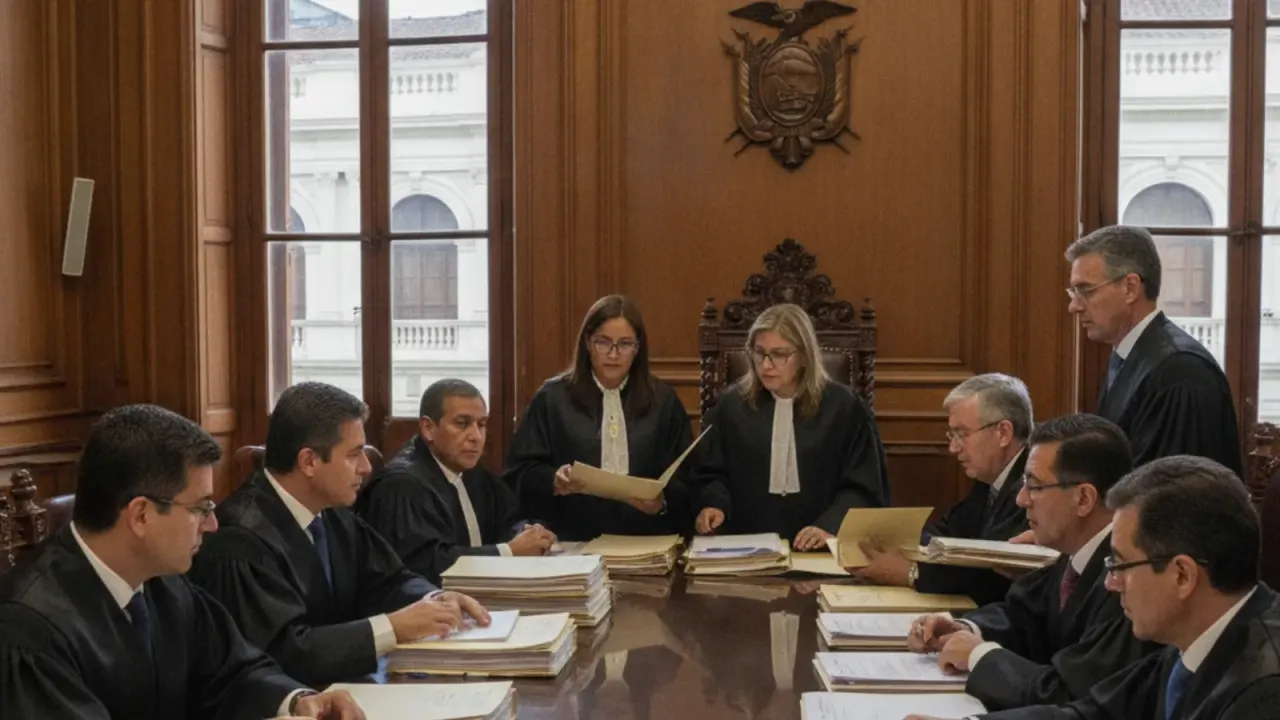
Ecuador’s Council of the Judiciary is advancing a plan to appoint 222 temporary judges across courts and tribunals nationwide. The process follows the body’s declaration of an emergency in the Judicial Function on July 14, 2026, according to an August 12 report by El Universo.
The temporary appointments would cover first-level judicial units, administrative litigation tribunals, tax litigation tribunals, and combined administrative and tax litigation tribunals.
How the process is supposed to work
The approved methodology has three phases: a preliminary phase, a selection phase, and a designation phase.
The preliminary phase is handled by provincial directorates. It includes identifying vacancies, obtaining budget certification from the Provincial Financial Unit, and preparing the technical report needed to apply the methodology.
The National Human Talent Directorate is responsible for the selection phase. Its tasks include issuing the internal call, receiving applications, verifying requirements and disqualifications, and preparing the technical selection report.
The full Council of the Judiciary is responsible for the designation phase. That phase includes viability reports, a legal report, a draft resolution, the designation resolution, notification to selected judges, and coordination for the handover of the judge’s prior post.
Who can apply
For first-level judicial units, the internal call can include secretaries, senior clerks, judicial assistants, and court clerks with permanent, provisional, or occasional-service appointments. Applicants must have at least five years of service in the Judicial Function.
The rules also consider academic training, professional experience, and the absence of disciplinary sanctions that affect a person’s suitability. People with serious or very serious disciplinary sanctions cannot apply. Applicants must submit a notarized sworn declaration stating that they do not have the disqualifications listed in the Organic Code of the Judicial Function.
Academic training is worth 50 points, and professional training is worth another 50 points, for a total of 100.
The independence question
The president of the Council of the Judiciary, Mercedes Caicedo, rejected the label “traveling judges” and said the appointments are meant to address a shortage of judicial operators. Legal representatives quoted by El Universo agree that the shortage is real but question the design.
One concern is that the methodology does not specify how long a temporary judge will serve. Another is whether people with occasional-service contracts can enter a process for temporary judges without a competitive examination. The story also reports criticism that temporary judges could be exposed to pressure or political interference.
What This Means for Expats
The plan is not a new rule for residency, property, tax, or immigration cases. Its relevance is institutional: courts are where many disputes eventually need to be resolved, and the speed, continuity, and perceived independence of the judicial system affect residents and businesses regardless of nationality.
Foreign residents with an active legal matter should ask their lawyer which court or tribunal is involved and whether a temporary appointment could affect the docket. The current report describes a methodology and a pending designation process; it does not announce the names of the 222 judges or a final appointment schedule.
Source: El Universo
More in Politics
View all →Cuenca's Suspended Mayor Cristian Zamora Faces Illicit Enrichment Charges, Denies Allegations From Mexico
September 22, 2026
Xavier Jordán Detained in U.S., Faces Deportation to Ecuador Amidst Multiple High-Profile Cases
September 18, 2026
Ecuador Dismantles Anti-Corruption Unit, Raising Concerns for Judicial Integrity and Security
September 18, 2026
Keep practical Ecuador coverage free to read.
Reader support helps fund source monitoring, translation, editing, publishing, and national coverage for expats across Ecuador.
Comments
No comments yet. Be the first to share your thoughts!