Noboa Reaches Chengdu After Seven Ecuador-China Economic Agreements

President Daniel Noboa arrived in Chengdu on August 21, 2026, continuing a week-long state visit to China after Ecuador announced seven economic and renewable-energy agreements in Beijing. Primicias reported the update at 08:38 on August 21.
The trade message from Chengdu
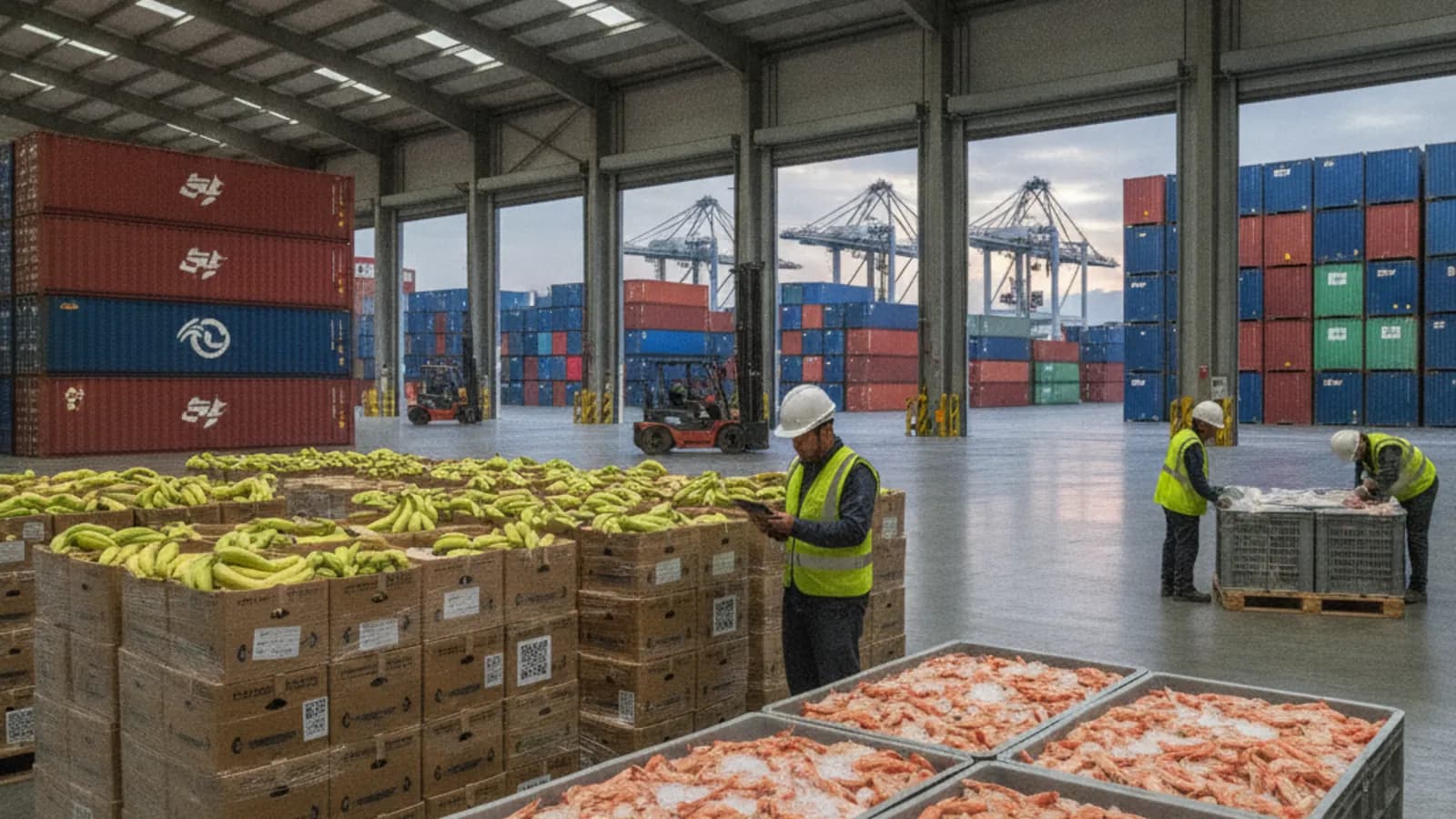
Noboa met Wang Xiaohui, secretary of the Communist Party in Sichuan, and promoted Ecuadorian exports including bananas and shrimp. The Presidency described the opportunity as access to a Chinese market of 380 million people.
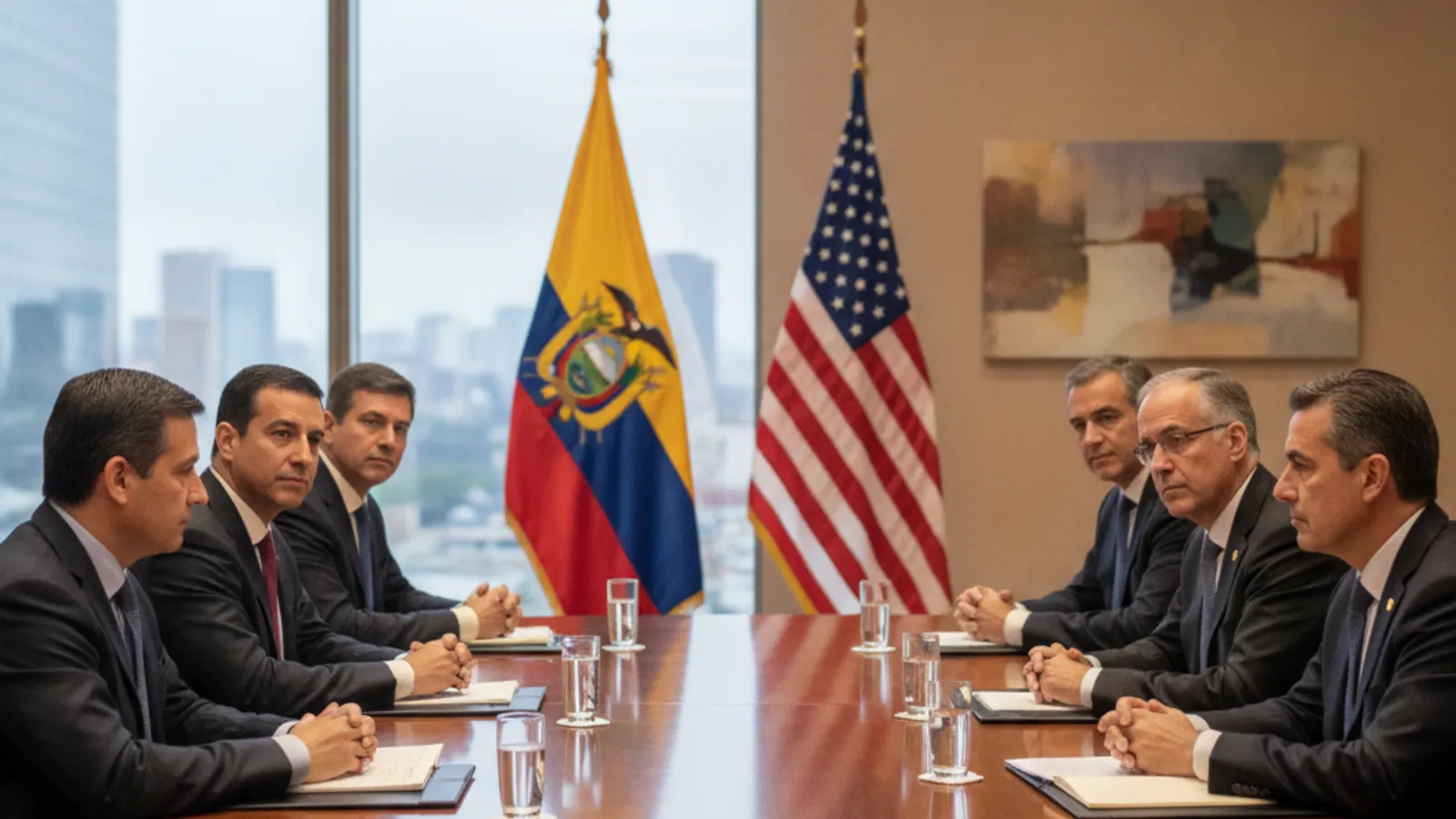
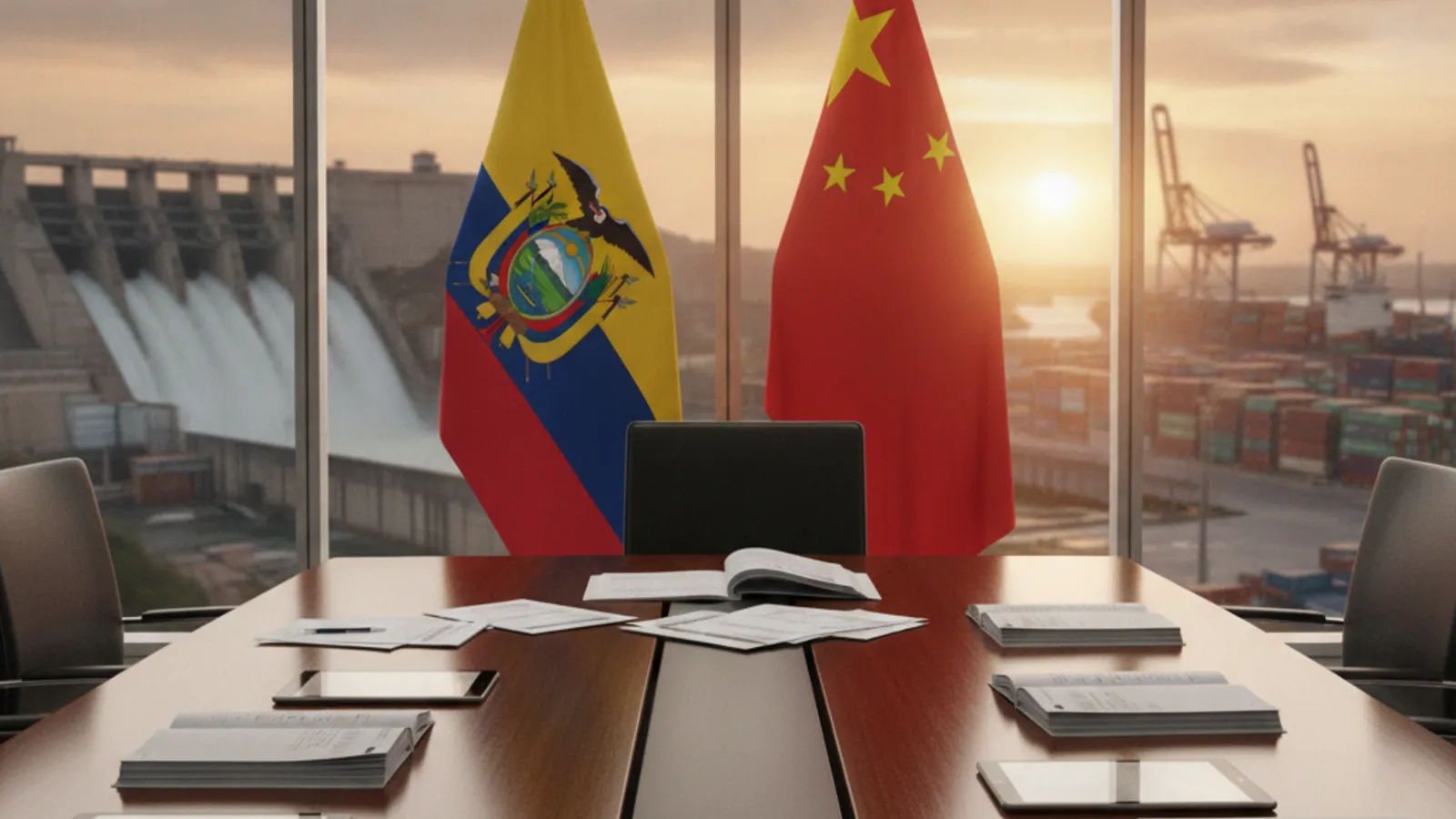
The visit is also tied to the existing trade relationship between Ecuador and China. During his meeting with Chinese President Xi Jinping, Noboa agreed to strengthen coordination of development strategies and use the trade agreement already in force to expand exchanges. The Chinese side expressed a willingness to import more Ecuadorian agricultural and food products and encourage Chinese companies to invest in Ecuador, according to the report's account of the Chinese Foreign Ministry's position.
That combination matters because the announcement is doing several jobs at once. It presents Ecuadorian food exports to Chinese decision-makers, links trade to investment promotion, and puts cooperation in public security, health, education, and risk prevention alongside commercial activity. Those are related but different channels: a market-access result is not the same thing as an investment decision, and a non-reimbursable cooperation commitment is not the same thing as a private-sector project.
What Ecuador announced
The announced package covers cooperation in energy, mining, infrastructure, trade, and technology. One of the financial results is USD 42.7 million in non-reimbursable Chinese cooperation. Almost half is designated for projects including the purchase of 125 police patrol trucks, stronger health services, and a productive-reactivation program in northern Ecuador. A further USD 14.7 million is designated for education, production, and risk prevention projects.
The report also says Ecuador obtained the rehabilitation of eight shrimp exporters that had been suspended in 2025 and early 2026. Noboa separately raised Ecuador's interest in attracting Chinese investment in energy, mining, and infrastructure.
The immediate commercial checkpoint is therefore the shrimp decision. If the eight exporters actually resume access, the change would be visible through shipments and buyer relationships. The investment side will take longer to evaluate because the source does not name each project, investor, or delivery milestone. Until those details appear, the value of the trip is best measured as a set of announced openings rather than as completed investment.
Why this matters for residents
For foreign residents, this is a national policy and trade story rather than an immediate change to immigration rules. The practical questions are whether the announced cooperation becomes funded projects, whether the eight shrimp exporters actually resume shipments, and whether the export push creates new commercial activity in ports, logistics, agriculture, and related services.
The source does not identify all seven agreements by name or provide a timetable for each project. Expatriates who work with Ecuadorian companies should treat the announcements as an active pipeline and look for specific counterparties, contracts, procurement notices, and implementation dates.
Source: Primicias
More in Politics
View all →Keep practical Ecuador coverage free to read.
Reader support helps fund source monitoring, translation, editing, publishing, and national coverage for expats across Ecuador.
Need help with your Ecuador visa? EcuaPass handles the paperwork for you. Learn more →
Comments
No comments yet. Be the first to share your thoughts!