El Nino Is Pushing Ecuador Fishers Farther Offshore and Prices Higher

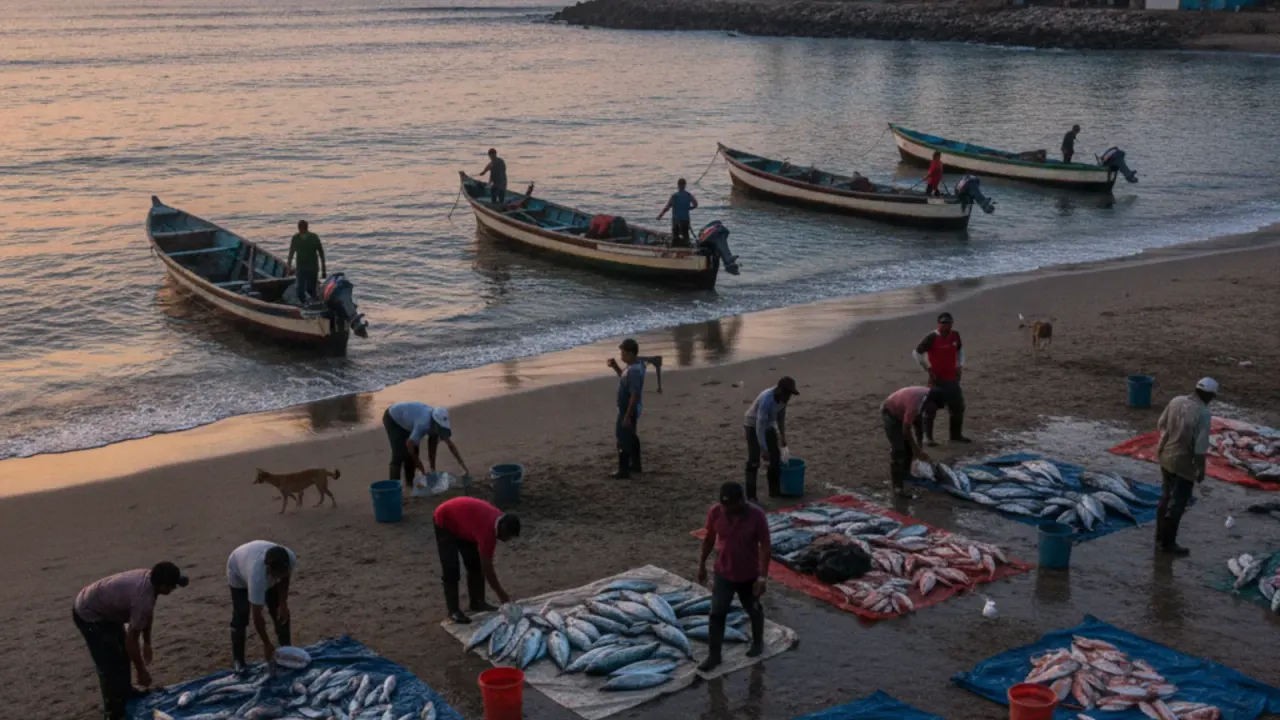
Ecuador's El Nino conditions are showing up in the fishing economy, not only in weather forecasts. Ecuavisa reported on August 23, 2026, at 7:40 p.m. that warmer sea temperatures were affecting at least 50,000 artisanal fishers and changing where boats searched for catch.
Boats are traveling farther
The report focused on the fishing port of Santa Rosa in Santa Elena. Fishers told Ecuavisa that when the ocean was not as warm, their trips were made about 70 miles from the coast. They now have to travel about 150 miles to find the species they need.
That change raises operating pressure. Longer trips mean more time and fuel before a boat returns with fish, while lower availability can move the cost of the catch upward. The report describes the effect as a chain from ocean conditions to fishing operations, then to wholesalers and municipal markets.
Albacore prices have moved sharply
The report says shortages have affected several species, especially albacore, which is used in the traditional Ecuadorian dish encebollado. A fish trader said albacore had been selling at USD 1.10, USD 1.20, or USD 1.30 about three weeks earlier, but had reached USD 2.00 or USD 2.20. If prepared as fillets for a market, the price could reach USD 5.00 per pound, according to the same account.
Another seller said robalo was being purchased at USD 4.00 per pound and sold at USD 4.50, while picudo was also becoming more expensive. These are reported market prices from the cited port and sellers, not a national price index or a promise that every market in Ecuador is charging the same amount.
What this means beyond the coast
For expats living on the coast, the story points to a direct food-price and availability issue. For residents elsewhere in Ecuador, it is a reminder that climate conditions can move through supply chains even when the local weather feels normal. Fish restaurants, household shoppers, and small food businesses may all see the effects before official statistics catch up.
The report says fishers are extending their working days to keep their families' businesses going. That response may help preserve supply, but it also shows the pressure on small producers when the catch moves farther offshore.
What This Means for Expats
If seafood is part of your regular budget, compare prices across markets and expect more variation than usual. Restaurants may change menus or portions when certain species become scarce. The useful signal to watch is whether the warmer water persists and whether prices remain elevated after additional fishing cycles.
This is a climate-linked business story, not a prediction that seafood will disappear. It does show how quickly a marine anomaly can affect working conditions, local prices, and everyday meals.
Source: Ecuavisa
More in Economy
View all →Ecuador Faces Early Dry Season and Energy Challenges, Urges Conservation Amidst El Niño Threat
September 25, 2026
Ecuador's Remittances Set to Reach Historic High of $8.02 Billion in 2026, Fueling Economic Growth and Housing Initiatives
September 21, 2026
Gapal Interchange Award Delayed Amid Bidder Claims in Cuenca, Road Studies Progress in Azuay
September 21, 2026
Keep practical Ecuador coverage free to read.
Reader support helps fund source monitoring, translation, editing, publishing, and national coverage for expats across Ecuador.
Need help with your Ecuador visa? EcuaPass handles the paperwork for you. Learn more →
Comments
No comments yet. Be the first to share your thoughts!